You cannot hand curiosity to a child. You cannot assign resilience to a staff. What you can build is the culture where those skills become necessary, safe, and worth repeating.
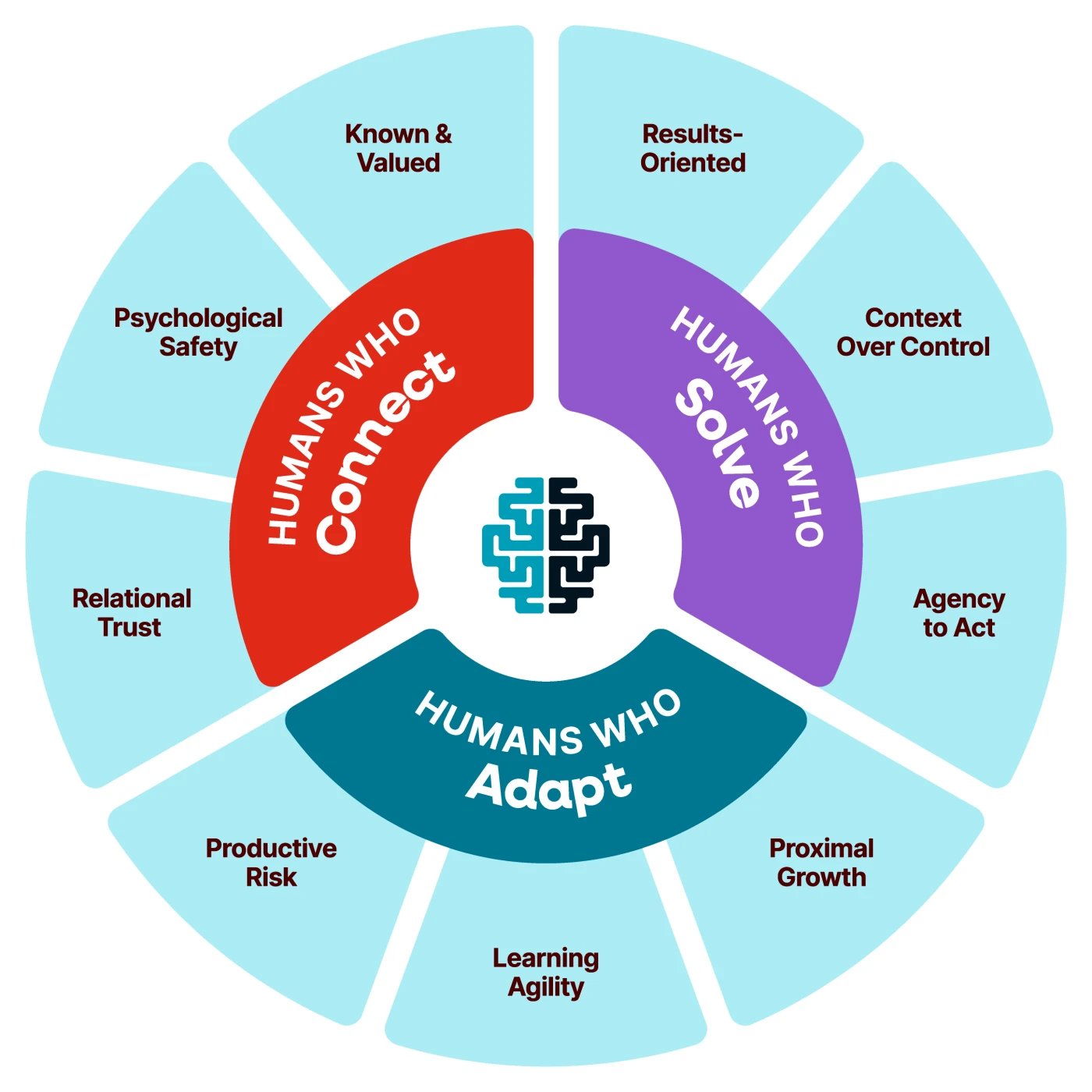
Nine conditions describe that culture, and they hold the same in a third-grade classroom as they do in a leadership meeting.
People arrive already capable of curiosity, judgment, and perseverance. What decides whether any of it shows up is the culture around them. Every leader has seen this, the same lesson landing in one classroom and going flat next door, the same agenda producing an honest staff meeting in one school and a quiet one at another. Human skills do not transfer the way content does, human skills develop when something in the day requires them. Building the culture that requires them is the work of the adult in charge.
AI now does in seconds the work schools spent a century learning to measure. What separates one graduate from another is no longer what they know. It is what they can create, judge, and stay with long enough to solve.
Those capacities grow through daily experience, and they grow in adults the same way they grow in students. Every district already has classrooms and teams where that experience is built well, usually by a strong leader working on instinct. What has been missing is a way to name what those leaders are doing, so it becomes something a district can build everywhere instead of something a student gets by luck.
These conditions are how a leader shapes the culture of a team and how a teacher shapes the environment of a classroom.
When people feel seen, safe to be honest, and able to count on each other, they bring their whole thinking into the room.
People are known and valued for their strengths and contributions, so they bring their full selves to the work and to each other.
People can speak honestly, ask for help, and admit mistakes without fear, so they can take the risks that learning requires.
People can count on each other to follow through and tell the truth, so they can depend on one another to do hard things.
When people own the outcome, understand the why, and hold real authority, work turns from execution into thinking.
People own outcomes and figure out how to reach them, so the work is aimed at impact, not just completion.
People are given the why, not just the what, so they can reason through the work rather than execute someone else's plan.
People have real authority to act on what they know, so their thinking gets tested against reality and sharpens.
When people can try things that might not work and reflect on what happened, capability compounds instead of plateauing.
People can try things that might not work without being punished, so they keep experimenting instead of playing it safe.
People learn how to learn, so they can take on work nobody has trained them for.
People work at the edge of what they can do today, so they grow and together produce what once looked impossible.
Conditions travel downward through a system. What a cabinet builds with its principals is what a teacher builds with students, whether anyone intends it or not.
Cabinets hand real authority to the people closest to students, and decisions start moving at the speed of the work.
Principals protect the teacher who tried something new, and staff keep bringing their best thinking to the building.
Teachers hand over the outcome and hold back the steps, and students build judgment instead of compliance.
Leaders and educators build them with practice, feedback, and people to work alongside. That is what our professional learning is for.