News
What Does California's Portrait of a Learner Mean for Your District?
The State Board named seven competencies and adopted them as guidance. Your own Portrait still counts, and the question quietly changed.
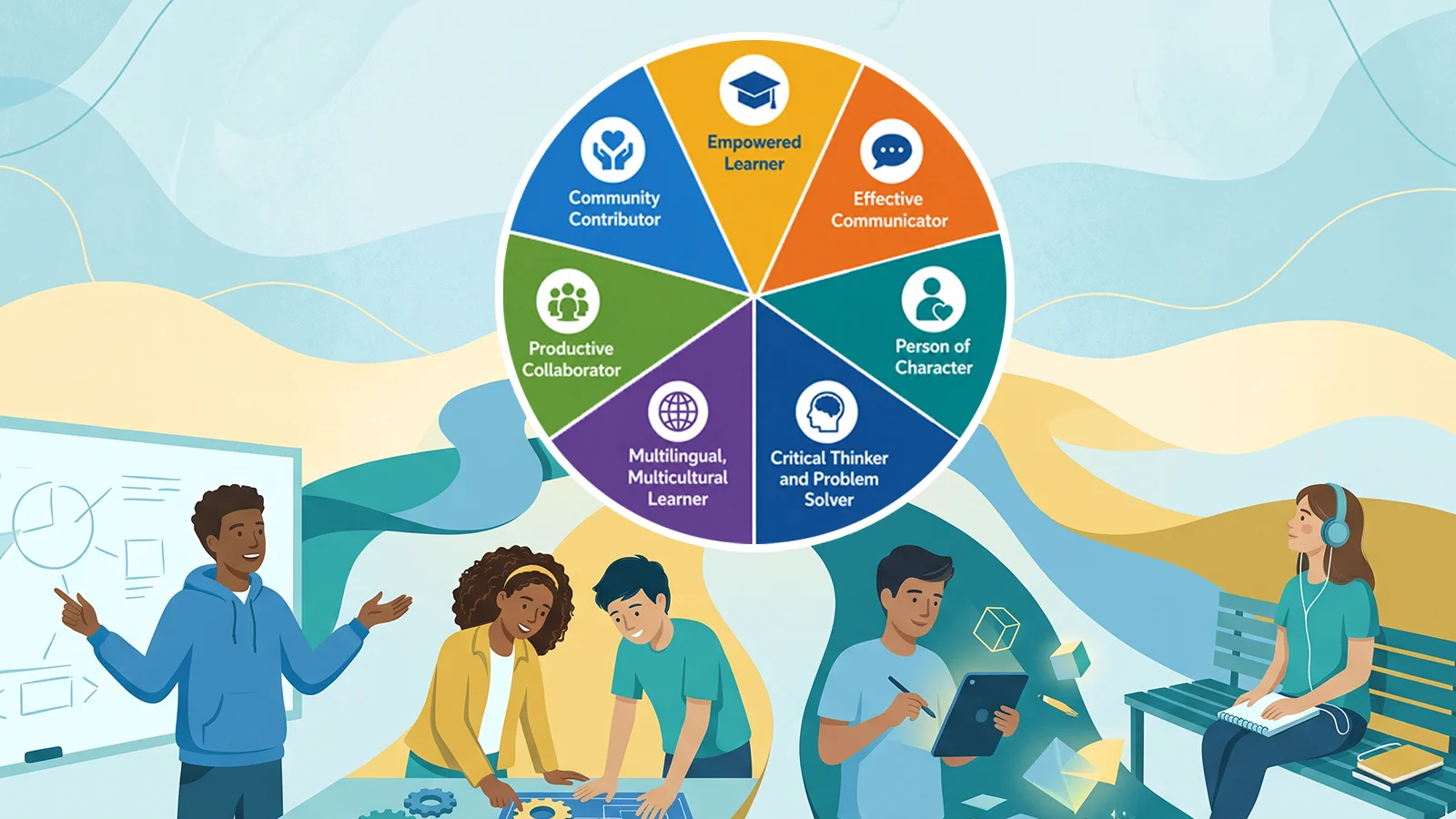
California has adopted a Portrait of a Learner. The State Board named a shared picture of the graduate it hopes every California school helps shape, described in seven competencies. An Empowered Learner. An Effective Communicator. A Person of Character. A Community Contributor. Districts have been doing this work for years; now the state has said it belongs at the center of curriculum, instruction and assessment.
What California Did
The State Board built it around seven competencies and adopted it as guidance. Guidance means the state is pointing a direction and giving permission, saying this work is worth doing, while leaving the how to the district. There is no expectation that a district change its own Portrait or adopt the state's. For leaders who have been building toward human skills without knowing whether the system was behind them, that permission is what they were waiting for. As Roman Stearns, executive director of Scaling Student Success, says, the state Portrait puts wind beneath the wings of the districts already doing this work.
What It Means for Your District
First, if your district already has a Portrait, it still counts. A state Portrait, adopted as guidance, sits beside the one your community built. Naming what matters is local by nature, and no state framework replaces it. If you want to see how your language lines up with the state's, that is a straightforward exercise, and most of your words will already be there.
Second, the direction is now clear and points in the same direction you were already heading. California is signaling that durable human skills belong at the center of a young person's education. That gives you cover with a board, a community, or a cabinet that wants a sign this is more than a passing trend.
Third, the adoption quietly changes the question. Once the state names the skills, naming them is no longer the hard part. Showing they are growing is.
The Part That Matters Now
The state has settled whether these skills matter. What it has not done, and cannot do for you, is show whether your students are actually growing them. That is the work in front of all of us now, and it is the harder, quieter work the field has mostly stepped around. It is also the work we built ProSolve to take on, so a district can keep its own words and still prove they are growing.
So set California's Portrait of a Learner beside your own. The question still waiting is whether you could show your board that those skills are growing in your students.
What would you want to show?
You can read the full Portrait and all seven competencies on the California Department of Education's site.
Dr. Michelle Ament
Dr. Michelle Ament is a national voice for reimagining learning and leadership in the Intelligence Age. She spent 30 years inside K-12 as a classroom teacher and district administrator. As ProSolve's Chief Academic Officer, she helps districts measure, report on, and improve the human skills the workforce is asking for. Michelle is Co-President of the Human Intelligence Movement and host of Unscripted Intelligence.