A Framework Designed for Teaching and Measurement

Districts have named the skills that matter. What has been harder to build is the structure underneath those words: what collaboration looks like in third grade, how a teacher recognizes it when it happens, and what growth looks like by senior year. The Human Skills Framework was built to be that structure.

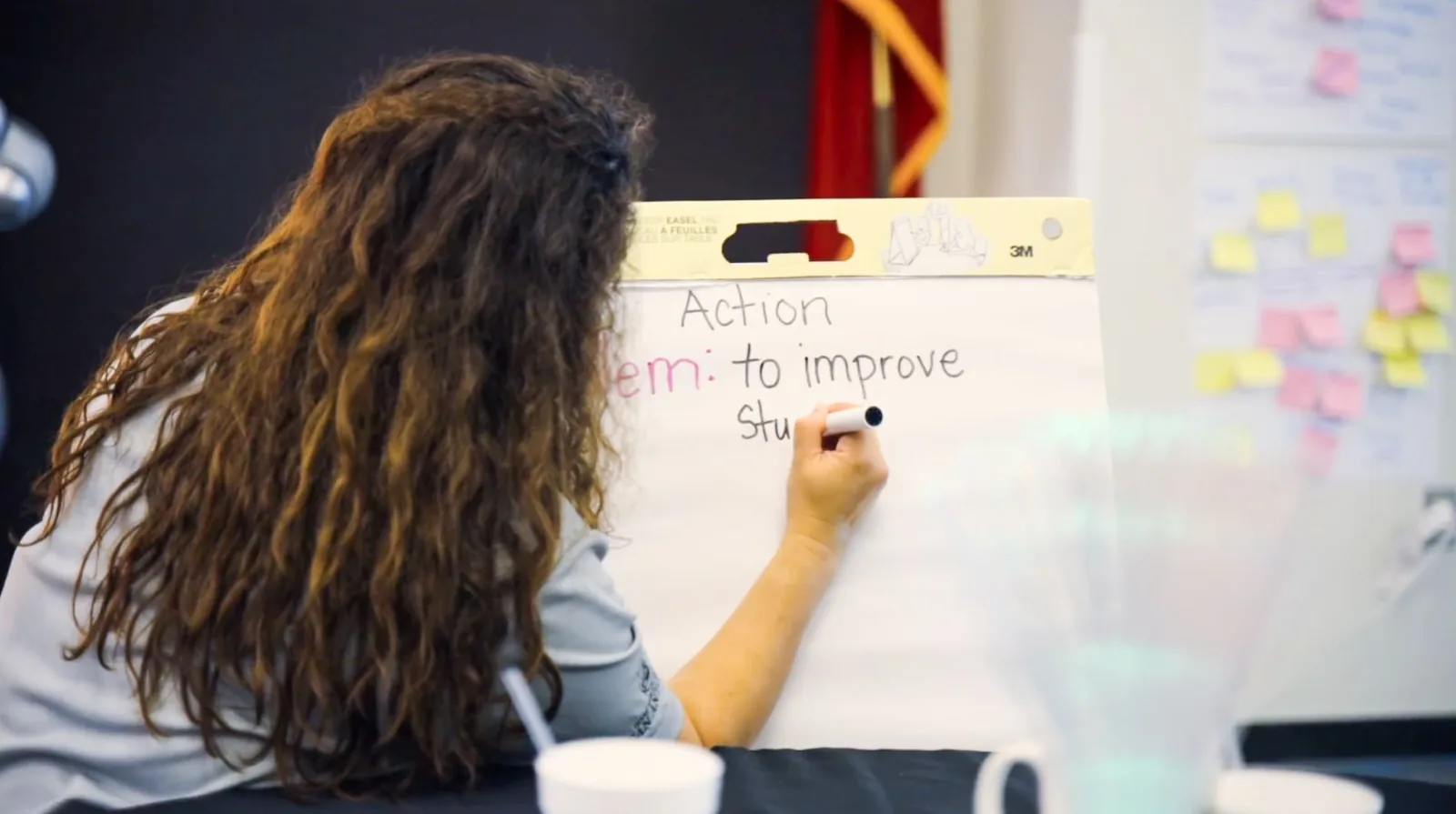
A district leader writes an action plan on a flip chart beside a wall of sticky notes

What a Framework Has to Do Before It Can Measure Anything

Most human skills frameworks were built to align a community around shared language, and they do that well. Building one that can also carry measurement takes a different specification.

Four things have to be true:

  • Written as observable action. What a student does, described precisely enough to score.
  • Broken into parts. Pieces small enough to teach and score one at a time.
  • Mapped across grades. Growth described stage by stage, from kindergarten through graduation.
  • Named when present and when absent. The behaviors that count as evidence, and the ones that show a skill is missing.

The Human Skills Framework was designed against all four. That is what lets one structure carry assessment, curriculum, and district reporting without anyone translating between them.

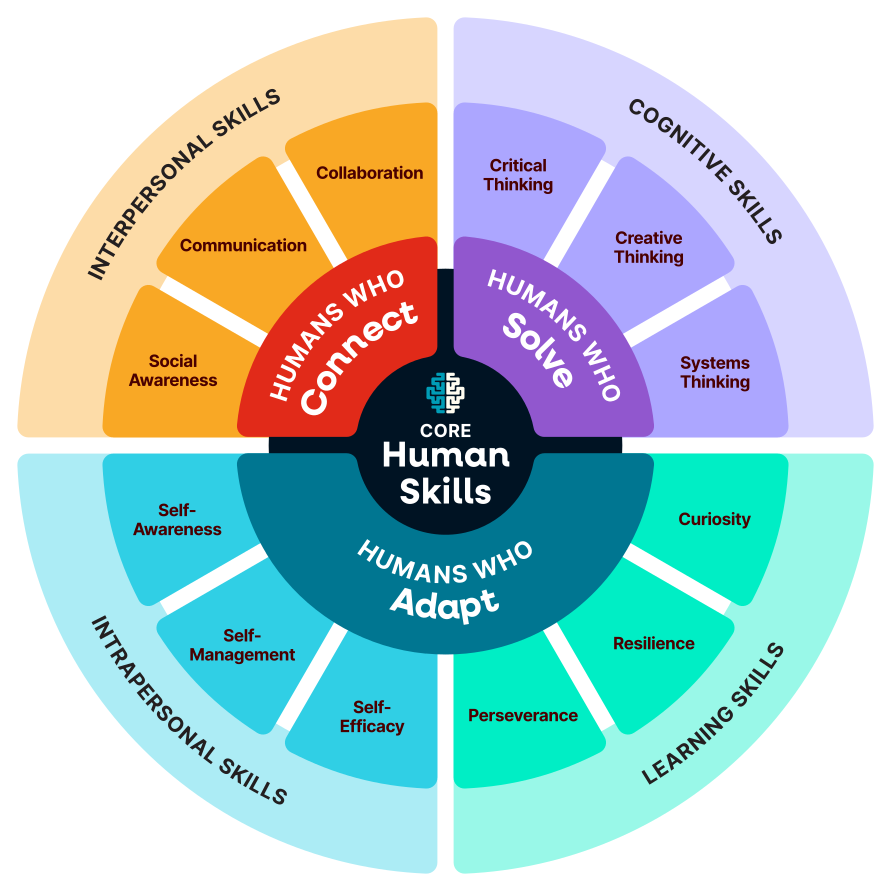
The ProSolve Human Skills Framework wheel: three domains, four categories, and twelve skills

One skill, all the way down

Communication, Followed From Definition to Classroom

The framework holds twelve skills. What follows is one of them, taken down every layer of the structure to a single observable behavior in a second-grade classroom. Every skill is built with this same depth.

01 The Skill
The Communication skill icon: two overlapping speech bubbles

Communication

Communication is expressing ideas so others can receive them, listening in ways that produce understanding, and adapting what you say to serve the person and purpose in front of you.

Every definition in the framework describes something a student does, which is what keeps the framework from scoring temperament. A student who thinks before speaking and a student who thinks by speaking can both demonstrate communication, and the definition has to be written so that both are visible.

02 The Strands
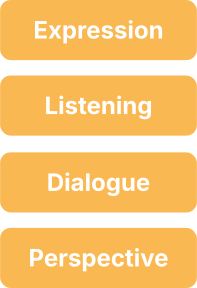
The four Communication strands stacked: Expression, Listening, Dialogue, Perspective

Expression, Listening, Dialogue, Perspective

Communication breaks into four strands, each one observable on its own.

  • Expression. Articulates ideas clearly using precise language and examples that make thinking visible.
  • Listening. Attends actively to others' ideas, asks clarifying questions, and builds on what was heard.
  • Dialogue. Engages in reciprocal conversation that bridges differences and moves groups toward shared understanding.
  • Perspective. Anticipates audience needs and adapts tone, format, and approach for clarity and respect.

Breaking the skill apart is what makes it teachable. Telling a student to work on their communication gives them nothing to work on. Strands also surface what a single label hides: the student who speaks brilliantly and cannot listen, the student who listens deeply and cannot get a word out. Those two students need different instruction, and one communication score would treat them the same.

03 The Progression
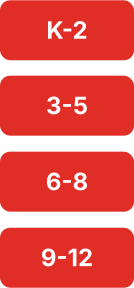
The Expression strand The four grade bands stacked: K-2, 3-5, 6-8, 9-12

Expression Across Four Grade Bands

Each strand is mapped across K-2, 3-5, 6-8, and 9-12. Every level is written as a learning progression rather than a fixed target, because a second grader and a tenth grader are demonstrating the same strand at different points in their development.

  • Foundational, K-2. Moves from partial thoughts to complete thoughts. From random order to logical sequence. From vague references to specific words.
  • Building, 3-5. Moves from burying the point to leading with it. From listing ideas to connecting them. From assertion to explanation.
  • Established, 6-8. Moves from connecting ideas to positioning them for impact. From reactive clarification to proactive prevention. From convenient examples to strategic selection.
  • Fluent, 9-12. Moves from continuing past the point to knowing when to stop. From listing reasons to integrating arguments. From rephrasing to diagnosing the source of confusion.

A teacher planning for third grade can see what came before and what comes next. Growth becomes measurable because the framework says in advance what growth looks like.

04 The Observables
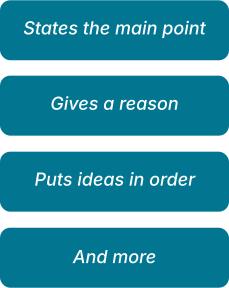
The K-2 grade band Observable behaviors stacked: states the main point, gives a reason, puts ideas in order, and more

What Expression Looks Like at K-2

At the Foundational level, Expression shows up in specific behaviors a teacher can watch for.

What to look for

  • States the main point
  • Gives a reason
  • Puts ideas in order
  • Names things specifically
  • Describes what others cannot see

What to watch for

  • Stops mid-thought
  • Lists without connecting
  • Repeats without rephrasing
  • Talks past the point

This is where an invisible skill becomes a visible one. A teacher who knows only what proficiency looks like can spot the students who have arrived. A teacher who also knows what struggle looks like can tell a student exactly what to do differently tomorrow.

Foundations of the Framework

The Human Skills Framework came out of a deliberate process: start from where the field already agrees, narrow by two explicit criteria, anchor every progression in learning science, and write every observable so a teacher can recognize it. It was written by Dr. Michelle Ament, ProSolve's Chief Academic Officer, drawing on her years as a classroom educator and district administrator.

Built on Consensus

The framework starts where the field already agrees. More than a dozen major frameworks across K-12 education, workforce development, and educational policy were analyzed for overlap, among them CASEL, the OECD Learning Compass 2030, the World Economic Forum's Future of Jobs research, America Succeeds' Durable Skills taxonomy, and NACE's career readiness competencies. When skills keep showing up across sources built separately, by people with different priorities, the field has already told you something.

Anchored in Learning Science

Every progression is built on established research. Backward design sets the destination first, so each level describes movement toward the graduation anchor rather than a fixed target. Vygotsky's zone of proximal development sets the distance between levels, keeping each step reachable with instruction. Cognitive load research sets the grain size. Developmentally appropriate practice governs what is fair to expect at each stage, which is what makes four grade bands the right number rather than an arbitrary one.

Written for Classrooms

Every observable had to survive one test. Could a teacher watch a student and recognize the behavior in the moment? That rules out evaluative language like "communicates well" and requires a description of what a student actually does. Definitions, strands, and observables were refined through ongoing conversation with classroom educators, district administrators, and experts working on human skills development.

Bounded by Evidence

The framework's case rests on how it is built: observable behavior, pieces that can be scored on their own, progressions anchored to development. The technical evidence in human skills assessment comes from putting instruments in the field, and that work is underway with districts using the HUB. A framework that overstates its evidence has no standing to ask districts to trust the evidence it produces.
The Same Structure Behind
Assessment, Instruction, and Reporting

A framework built this way becomes the guide for measuring, reporting and improving human skills. The same behaviors a teacher plans toward are the behaviors an assessment scores and the behaviors a district reports on, which is how a skill stays visible from a lesson to a board meeting.

Assessment

Every score produced traces back to a strand, a grade-band progression, and a named observable. There is no separate assessment vocabulary, so a score points directly at the student's strengths and opportunities for growth suggesting what a teacher would do next.

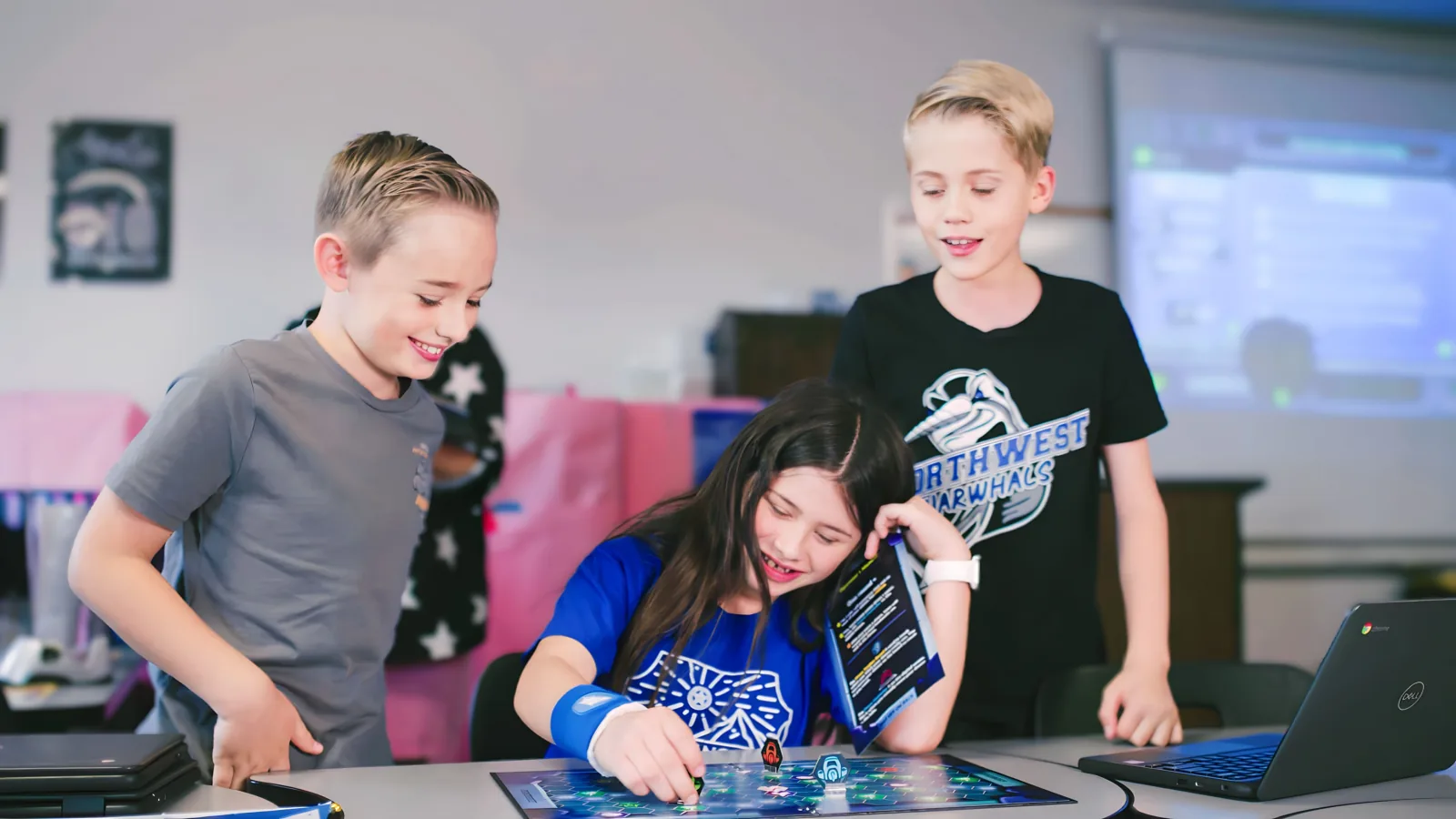
Three students gather around the tall card tower they built together

Curriculum and Programs

Lessons, experiences, and programs are built against those same strands and progressions. A teacher working on Expression in a third-grade classroom is working toward the same behaviors an assessment would look for, what gets taught and what gets measured trace to the same strand.

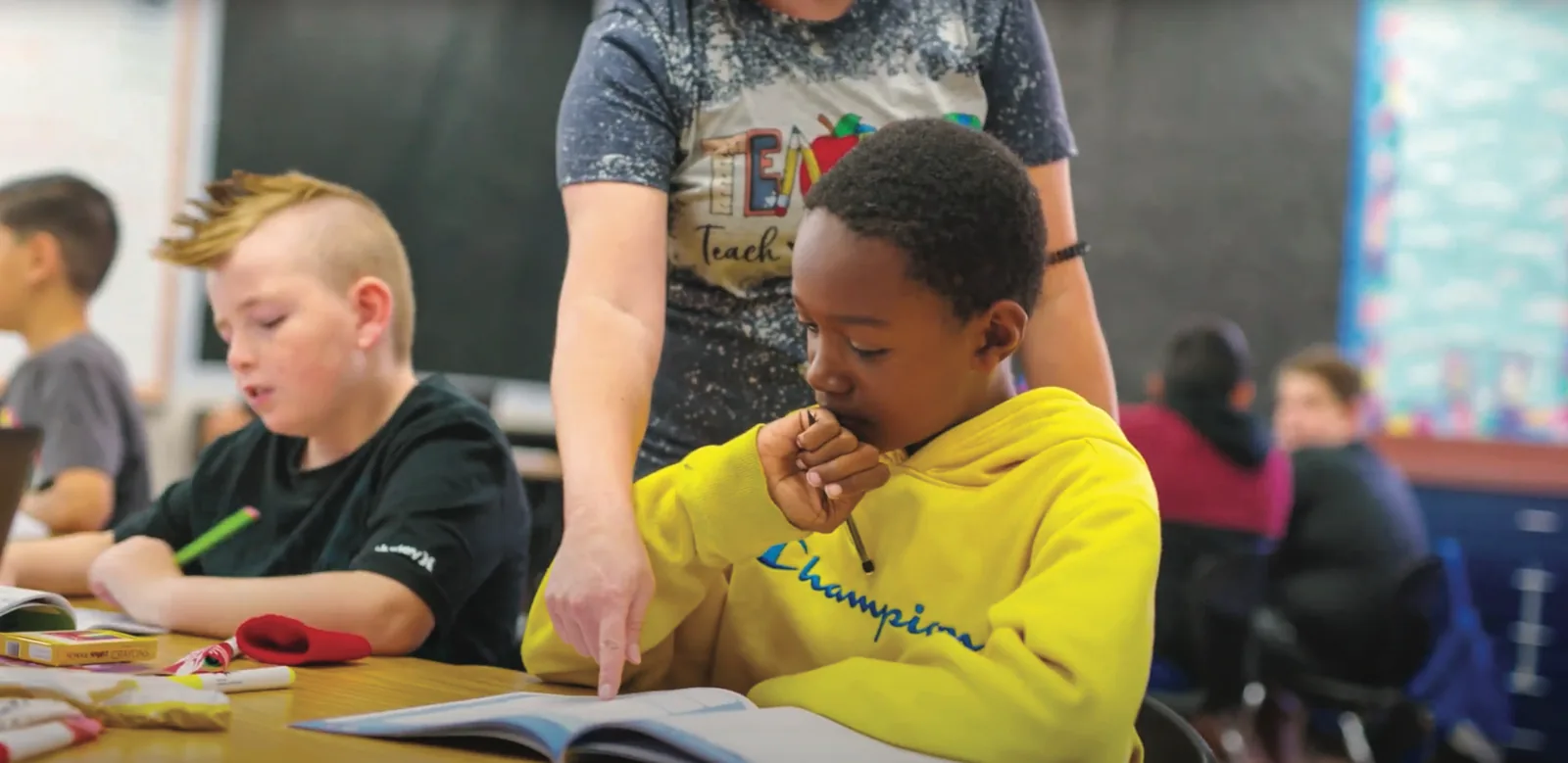
A teacher points into an open book while a student reads along

District Alignment

The framework crosswalks to the language districts already use, including CASEL's five competencies, the 4Cs, College and Career Readiness indicators, and Portrait of a Learner profiles. Districts keep their own language and gain grade-level indicators underneath it.

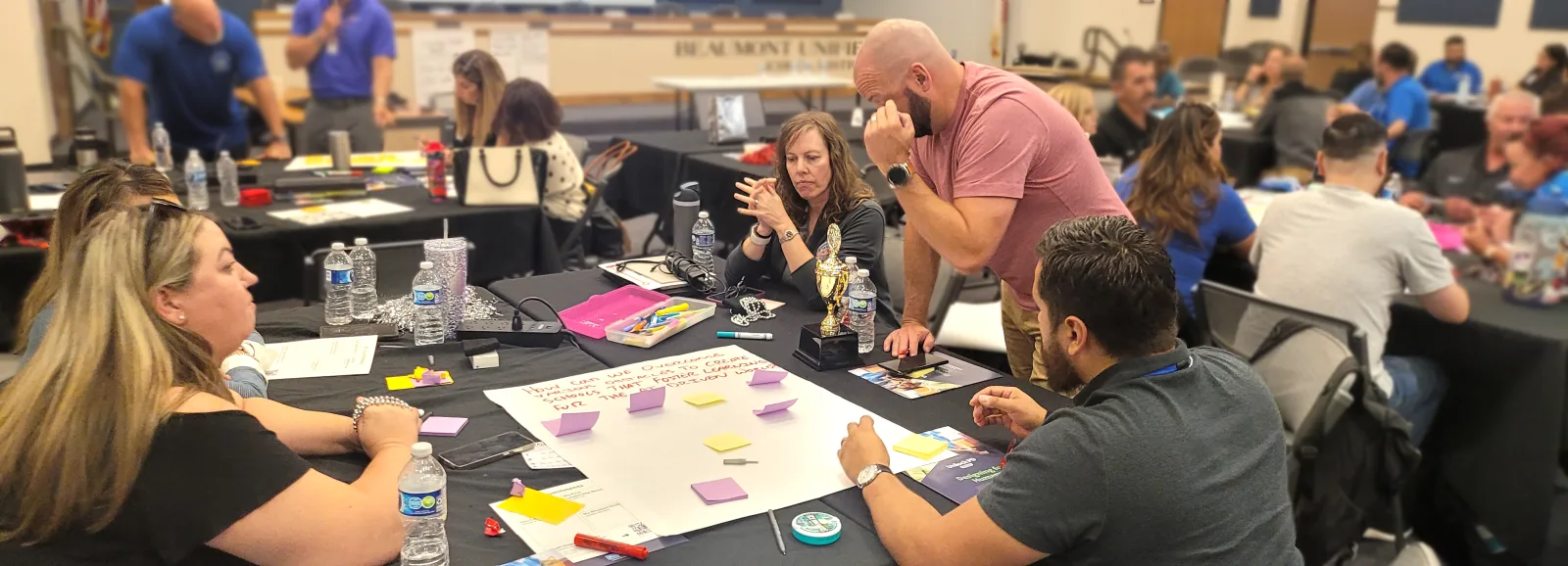
District staff around a board room table talking through a poster of sticky notes

See the Full Framework

Twelve skills, forty-eight strands, and the observable behaviors at every grade band. The guide lays out the whole structure, along with the research base behind it.