Why Hands-On PD Sticks
Teachers adopt new practices once they have practiced them. Your next PD day can be built around that.
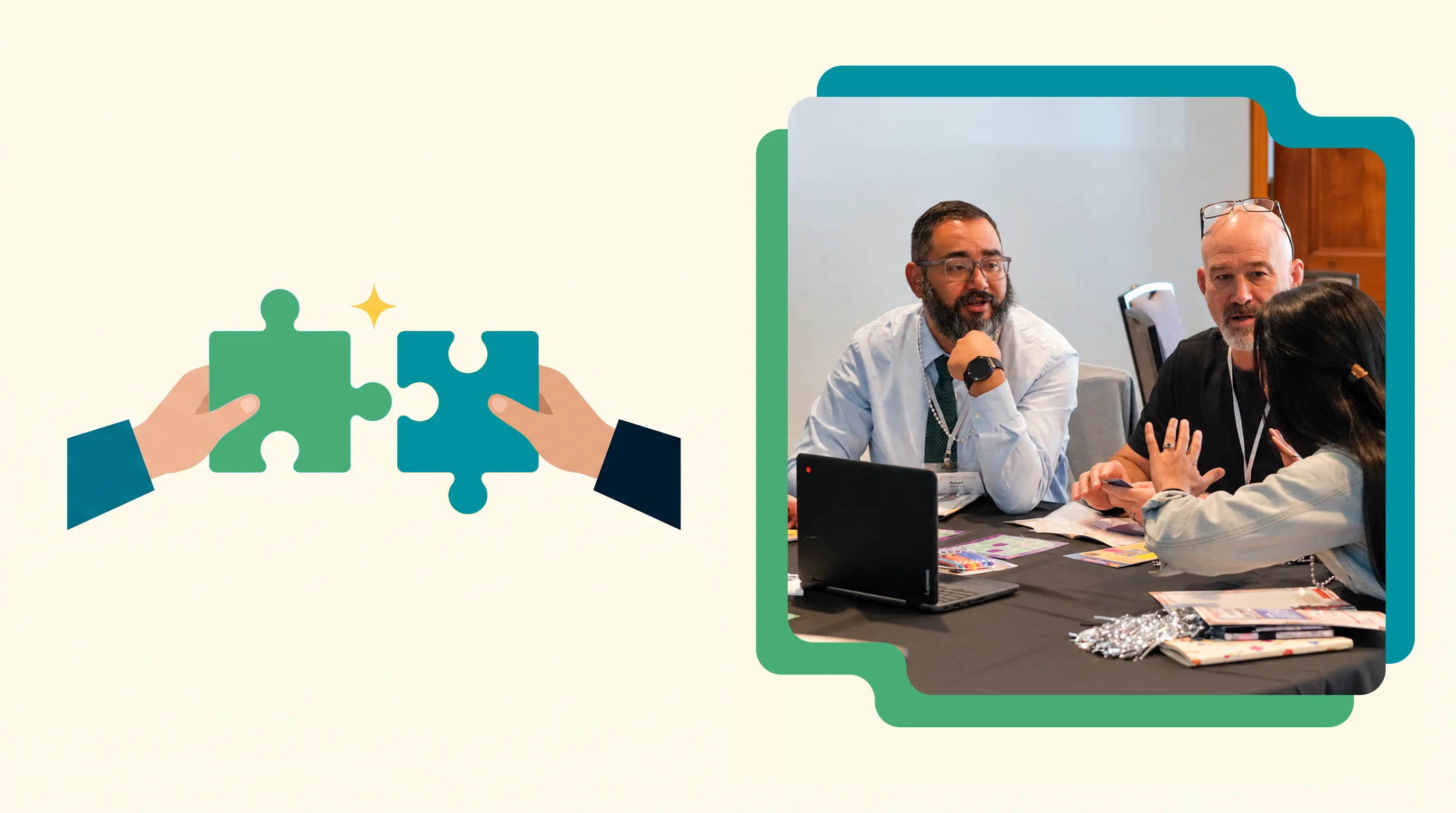
Six teachers crowd one table. A timer counts down on the screen, and the challenge in front of them can only be solved if they work together. One spots a pattern. Another tests it. Someone who rarely speaks in staff meetings ends up directing the group.
Sixty minutes later, the same six read their Human Skills Report together and start laughing. It describes exactly how they worked, including the stretch where nobody listened to the person with the right answer.
What Makes PD Stick
Teachers adopt new practices once they have practiced them. In 2017, Linda Darling-Hammond and her colleagues at the Learning Policy Institute reviewed 35 rigorous studies that linked teacher professional development to changes in instruction and student outcomes. The programs that produced results shared seven features. Three of them describe what happened at that table: active learning, collaboration among colleagues, and time for feedback and reflection.
How UNLOCK Works
A staff divides into small teams. Each team takes on timed, hands-on challenges designed so no one person can solve them alone. While teams work, an AI companion observes how each team collaborates, communicates, and solves problems. Every team leaves with a Human Skills Report describing how they worked together, from how they made decisions to how they recovered when they got stuck.
The conversation quickly turns to classrooms. Teachers who have just seen their own collaboration on the page start asking how to see the same skills in their students, and they now share a vocabulary for it.
Fitting It Into Your PD Day
A session runs 75 to 90 minutes, for one school or several together, and fits a PD day already on the calendar. Each team's report gives principals a concrete starting point: the team's strengths and its areas for growth in human skills.
What would your staff learn about how they work together if they spent your next PD block solving a problem side by side?
Source
- Darling-Hammond, L., Hyler, M. E., and Gardner, M. (2017). Effective Teacher Professional Development. Learning Policy Institute. Read the report
Dr. Michelle Ament
Dr. Michelle Ament is a national voice for reimagining learning and leadership in the Intelligence Age. She spent 30 years inside K-12 as a classroom teacher and district administrator. As ProSolve's Chief Academic Officer, she helps districts measure, report on, and improve the human skills the workforce is asking for. Michelle is Co-President of the Human Intelligence Movement and host of Unscripted Intelligence.