Your district has named the human skills that matter. Growing them is ongoing work. Leaders and educators meet across the year as a community of practice, learning the conditions those skills need and building them into the culture of their schools and across their county or region.
Adults already bring human skills to their work. Whether they flourish as humans depends on the culture around them. Students are no different. The conditions staff build for each other are the ones students end up feeling, which is why the work starts with the adults.
People are known and valued for their strengths and contributions, so they bring their full selves to the work and to each other.
People can speak honestly, ask for help, and admit mistakes without fear, so they can take the risks that learning requires.
People can count on each other to follow through and tell the truth, so they can depend on one another to do hard things.
People own outcomes and figure out how to reach them, so the work is aimed at impact, not just completion.
People are given the why, not just the what, so they can reason through the work rather than execute someone else's plan.
People have real authority to act on what they know, so their thinking gets tested against reality and sharpens.
People can try things that might not work without being punished, so they keep experimenting instead of playing it safe.
People learn how to learn, so they can take on work nobody has trained them for.
People work at the edge of what they can do today, so they grow and together produce what once looked impossible.
Districts invest in professional development to open new thinking. The harder part is what happens next, when that thinking has to become a daily practice. Four things decide whether it does.
A single day can spark new thinking. Changing how people work takes a year. The learning has to run long enough for new habits to hold.
People go further when they are learning together. Leaders and educators work alongside peers facing the same challenges, and ideas move between them.
Learning sticks when it connects to real work already underway. Anchor it to a priority the district is advancing, and the cohort carries it across the year.
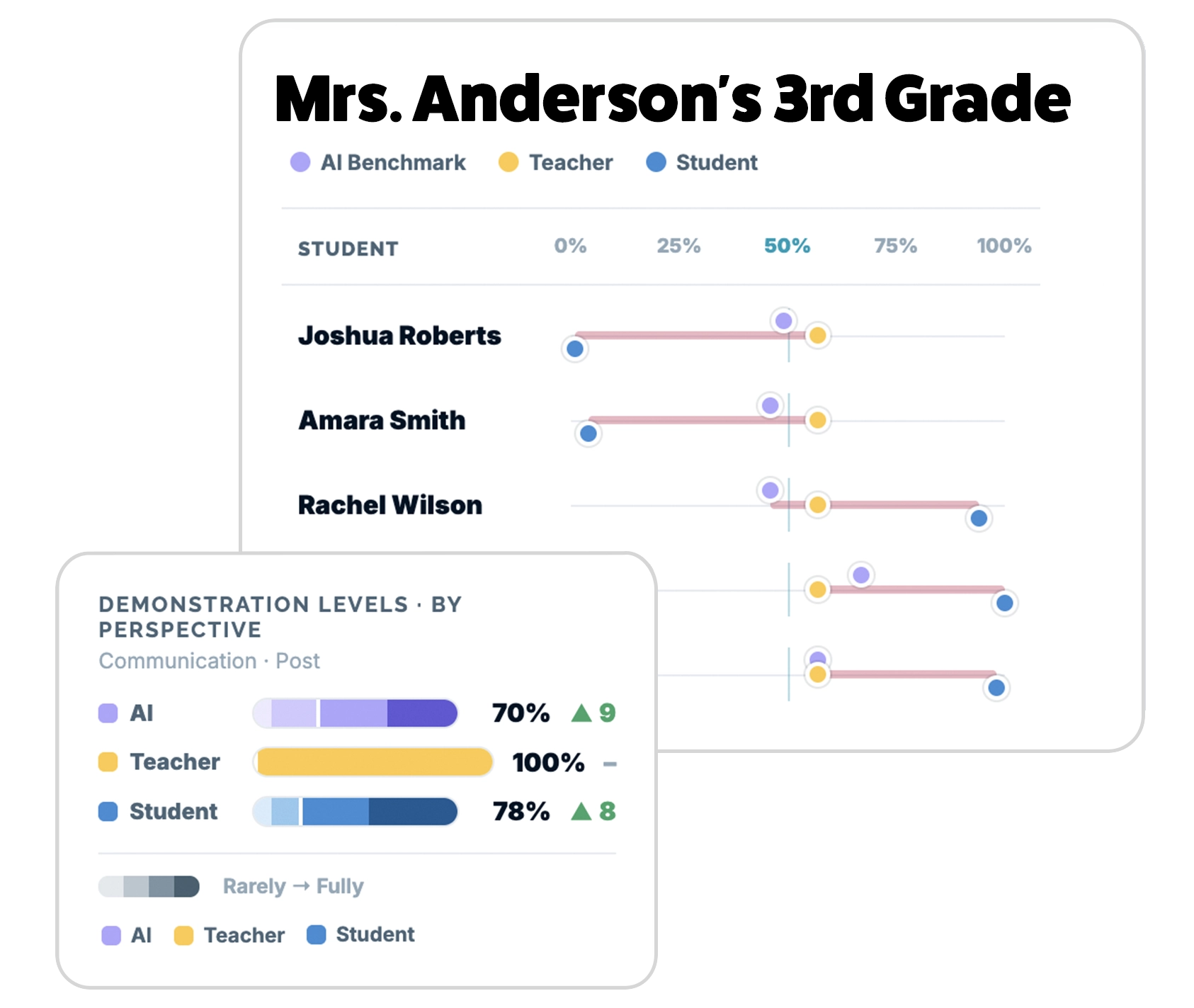
Ongoing learning should change how people work, and that change should be visible. The growth shows up in the staff, and in the students they teach, not just in how the day felt.
A priority you already named moves forward all year, and you can see the growth behind it.
You can tell where your team is strong and where to put your coaching.
You leave each session with one move, and it changes how you teach.
They learn from adults whose practice keeps deepening, inside a culture that keeps improving.
Results from a year-long cohort built on this model.
66% to 83%
Average self-rated growth in human skills, start of the year to end.
92%
How leaders rated learning as a team, the clearest signal the work lands when people do it together.
94%
Leaders who would recommend the experience to a colleague.
In a leadership cohort that meets across the year, leaders learn to read the conditions human skills need and build them into the work their district is already advancing.
ProSolve treats culture as something a leader builds on purpose, shaping the conditions a team needs so the human skills people already carry can show up in the work.
ProSolve builds professional learning as a community because culture changes when people work on it together, not when they sit through training and return to their offices alone.
ProSolve ties the learning to a priority the district is already advancing, so the work strengthens what matters most instead of adding one more thing to it.
ProSolve believes professional learning should change how people work and that the change should be visible, in a staff and in the students who feel it.
This work starts as a leadership cohort, where administrators across a district grow together. The same model extends to educators inside a district.
Professional learning with ProSolve strengthens the adult capacity underneath the work your district, county office, or regional center already leads. Built on the Human Skills Framework, it deepens your initiatives rather than adding to them.
Portrait of a Learner
A Portrait of a Learner names the human skills you want for students. Across a year of shared work, leaders and educators build those same skills in themselves and learn to create the conditions for them, so the Portrait shows up in how your teams lead and model it.
Explore Portrait of a Learner InitiativeSocial Emotional Learning
SEL lands when the adults guiding it have practiced the same skills. Over a year of shared work, staff build self-awareness, collaboration, and communication, and the conditions that let them grow, so SEL becomes something they live and pass on.
Explore Social Emotional Learning InitiativeCareer Readiness
Career readiness now rests as much on human skills as technical ones, including communication, collaboration, creativity, and critical thinking. A year of shared practice grows those skills in your teams, sharpening how they prepare students for the workplace.
Explore Career Readiness InitiativesLeadership Development
Districts invest in growing their leaders. A year of shared practice gives leadership teams a common language and lived experience in human skills, so they set a clear direction and model what they ask of everyone else.
Explore Admin RetreatsHear from leaders and educators who carried the work across a year, in their own words.
A short conversation is where it starts. We will look at what an ongoing community of practice could do for your teams, who belongs in the room, and the evidence your leaders would carry out of the year.
See Our Services for Professional Learning