Grow Them Through Experience.
The HUB measures human skills by comparing students' application of skills against our Human Skills Framework, then gives teachers the lessons and play that grow the human skills students need to thrive. One system for the evidence and the response.
The HUB supports:
Solution overview
Districts measure human skills as often as they need to, and every measure reports the same skills against the same framework. What the data reveals points to the lessons and play that build those skills, and the reporting speaks to every level of your district.
Assessment only matters if it changes what happens next.
HUB Assess captures what students do during a performance task, then what they say about how they applied their skills. Pulse Checks provide ongoing progress monitoring of the skills.
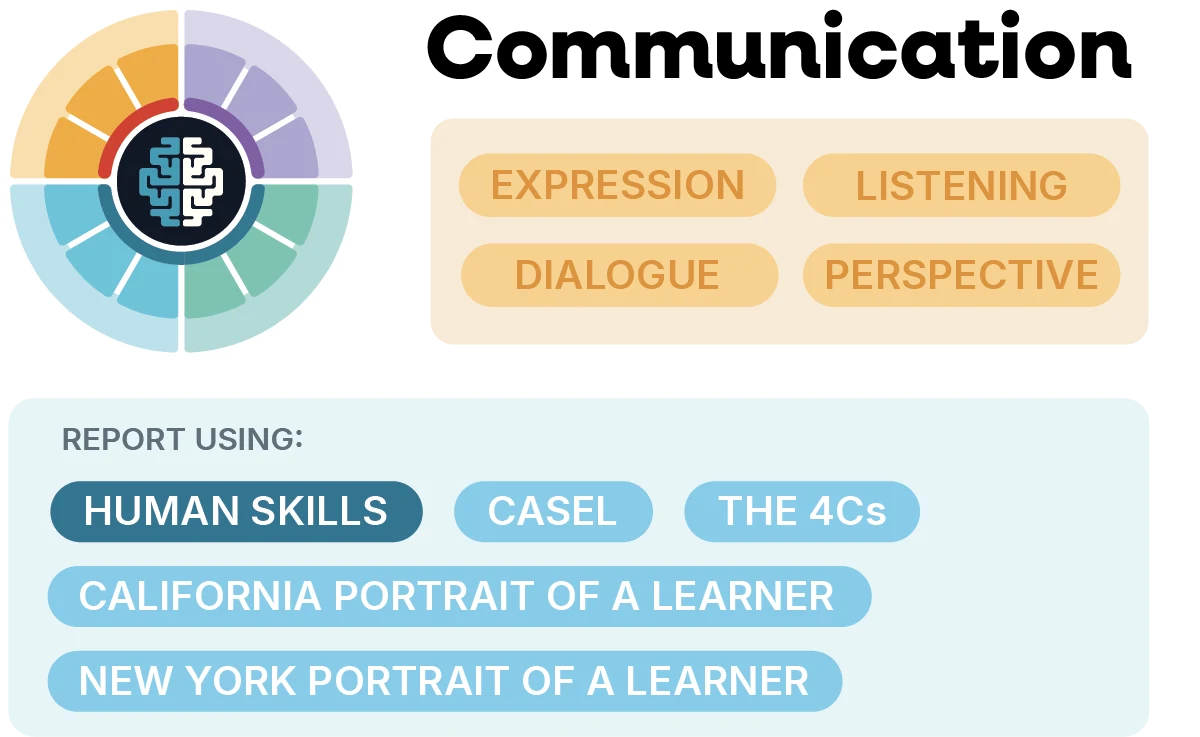
HUB Insights reports against the competencies and frameworks your district already uses.
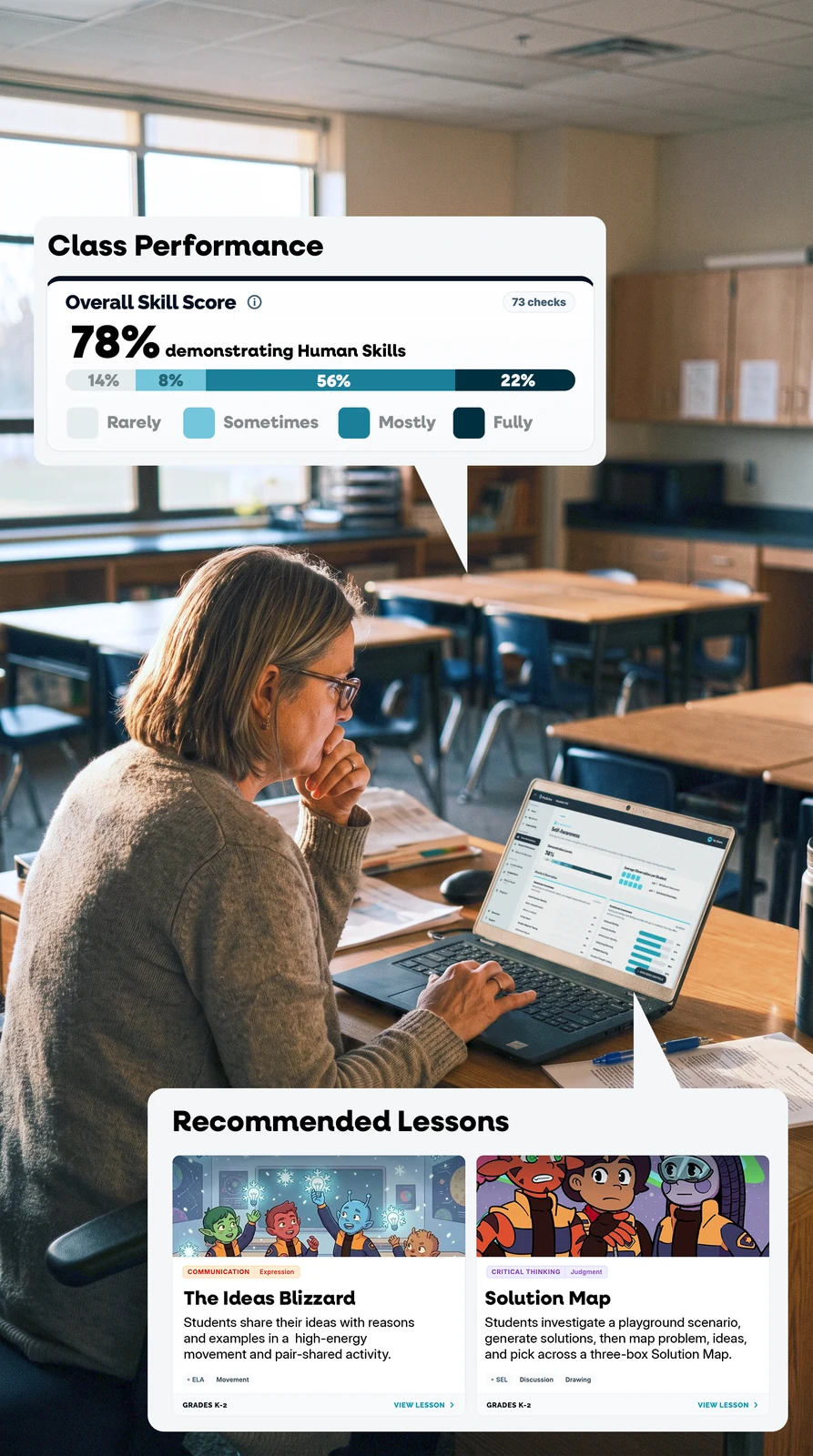
HUB Action turns insight into instruction with targeted lessons and play in the Arcade.
HUB Assess · Measure
In HUB Assess, students work through a performance task in small groups, then reflect on how they applied their skills while the experience is still fresh. Teachers rate the same skills using the framework's shared definitions, so every skill carries a student view and an educator view.
Pulse Checks are brief formative checks on the same skills, used for progress monitoring to keep a read on how skills are growing.
Grounded in the framework
categories
human skills
observable strands
Every task, reflection, rating, and report draws from one structure: 4 categories, 12 human skills, 48 observable strands, each defined clearly enough to see, measure, and teach.
The skills crosswalk to your Portrait of a Learner, SEL competencies, and College and Career indicators. One shared structure connects measurement, reporting, and instruction across your entire district.
Explore the Human Skills FrameworkOne measures human skills with more precision. The other reports them, student by student.
HUB Benchmark is a comprehensive human skills assessment, with AI analysis that scores what students said as a third perspective and provides a scale score for every human skill.
Explore HUB Benchmark HUB Student ProfilesHUB Student Profiles reports human skills for each individual student, so teachers see what a student does well, where they are ready to grow, and can assign the lessons that build it.
Explore HUB Student ProfilesHUB Insights · Report
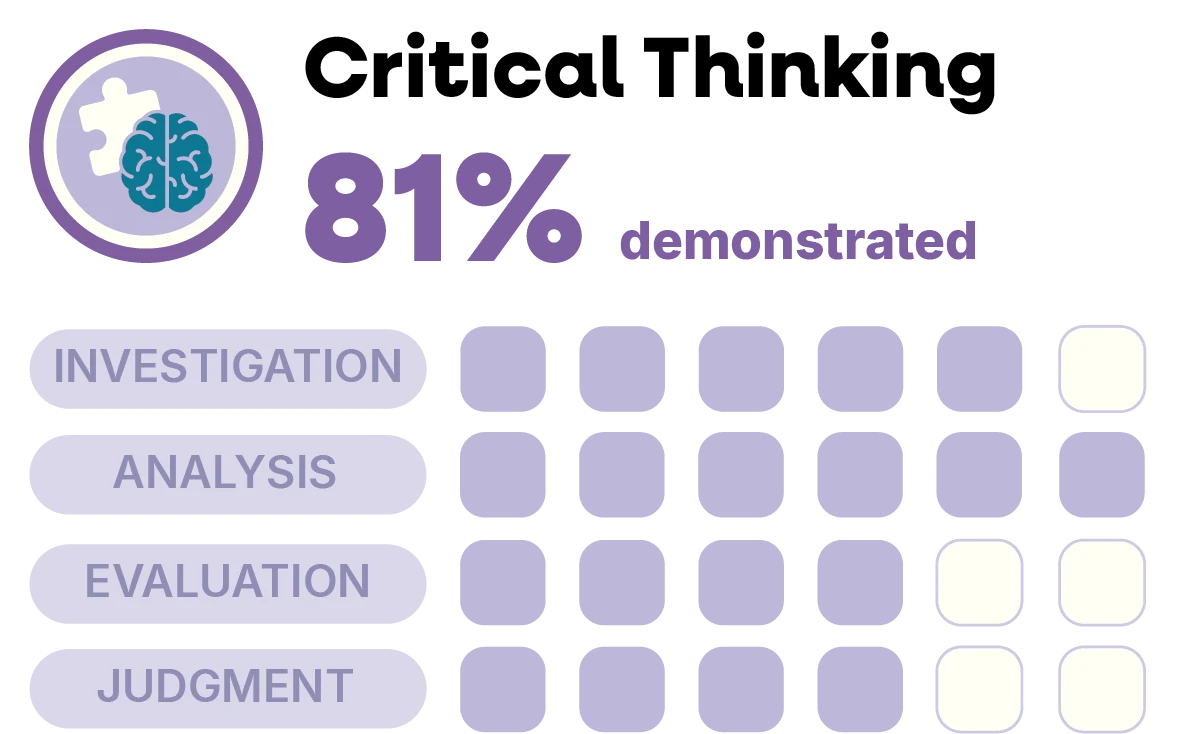
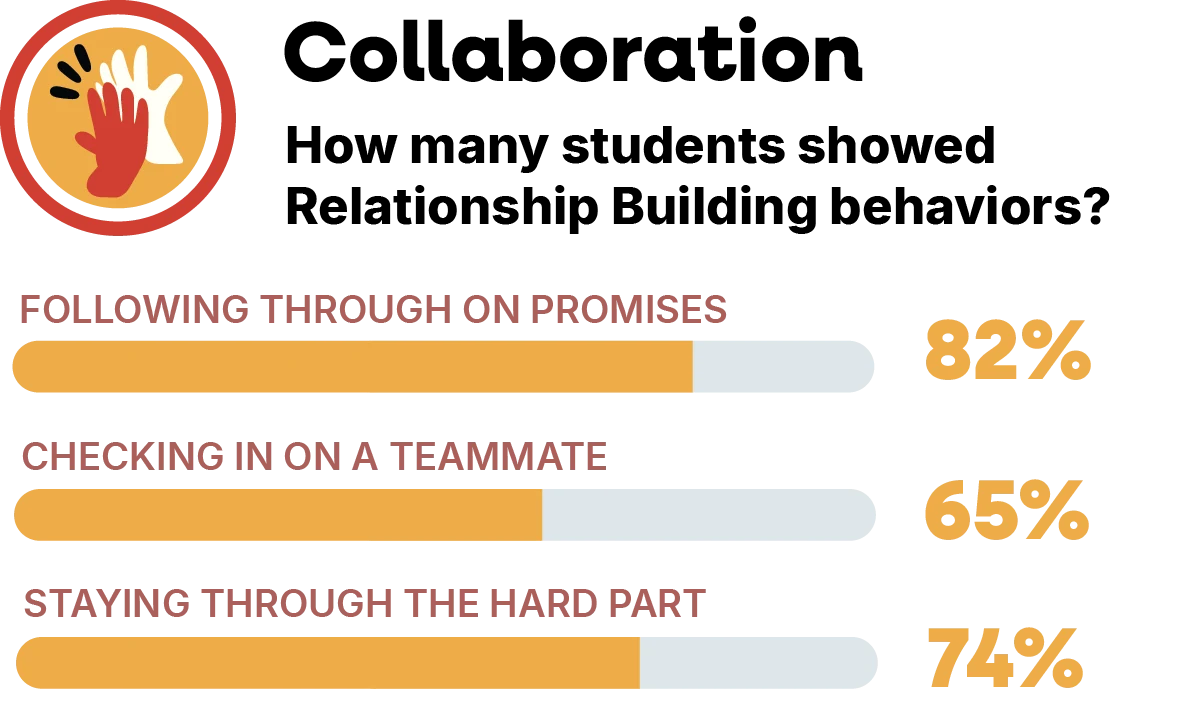
A third-grade team opens collaboration and sees two numbers. Thirty percent of students are mostly or fully demonstrating the skill. Across the class, five of the nine observable behaviors are being applied. The first number says where the class stands. The second says what students already have to build on and what to teach next.
The share of students mostly or fully demonstrating each skill, reported at class, school, and district level, monitored from the first check.
The specific behaviors underneath each skill, and how many of them students are applying. This is the number teachers respond to.
HUB Action · Improve
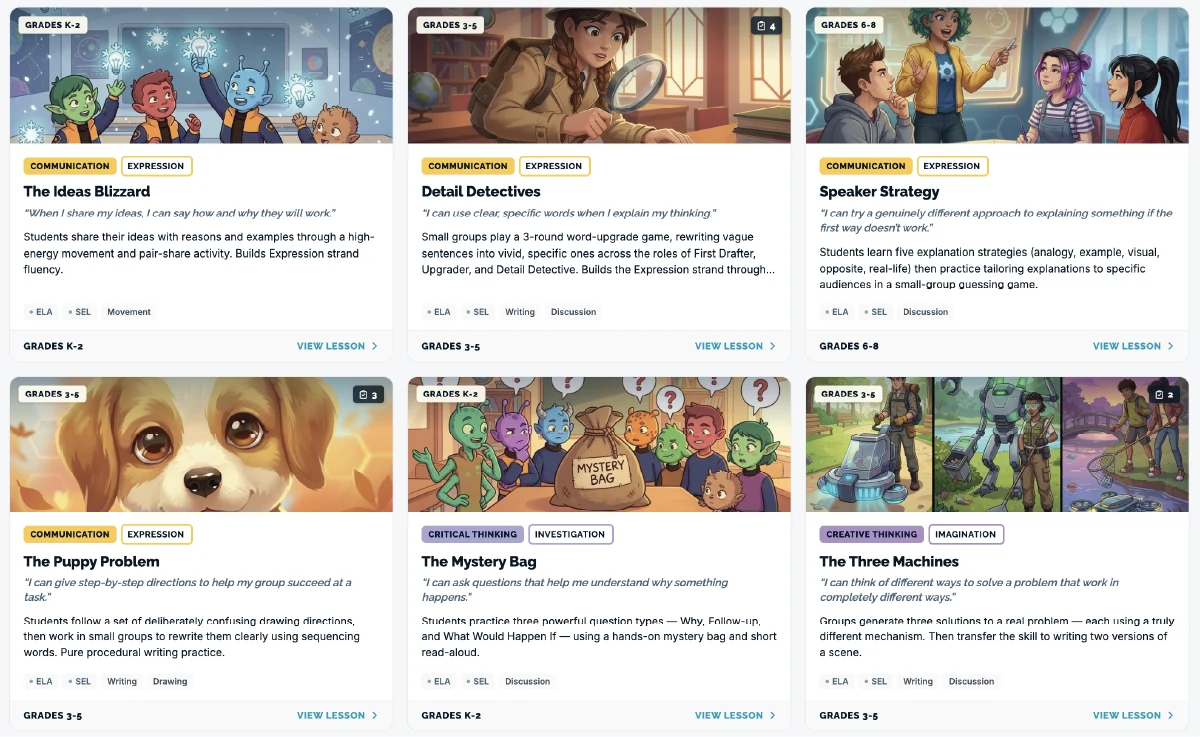
Every HUB Action lesson works in two steps. Students learn a skill through a short, scripted lesson built for intentional human skill building, then apply it in a play experience from Arcade. Human skills grow through application, so the lesson and the play work as one.
HUB Action works two ways. Districts use lessons responsively, based on what the data reveals, or use them throughout the year to build human skills alongside the instruction already happening.
Lessons begin with inquiry and spark curiosity about a skill before shifting to real-world application, with evidence along the way.
Each lesson opens by sparking curiosity about one human skill, naming what it looks like and why it matters, so students recognize it before they use it. Focused, scripted instruction then builds the skill inside the ELA or social-emotional learning the class is already doing, so any teacher can lead it with confidence.
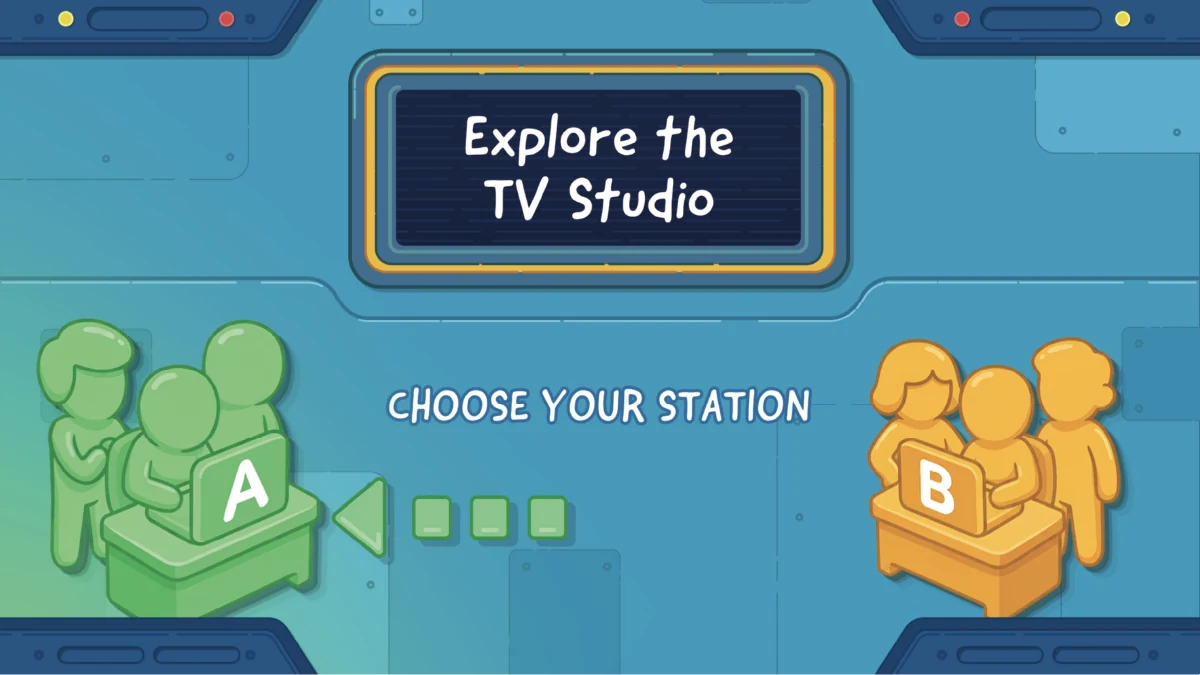
Students put the skill to work in a hands-on experience from Arcade: a game, a challenge, or an open-ended problem a group has to solve together. Each experience flexes to the skill and the setting, whether it's whole-class, small-group, or individual play.
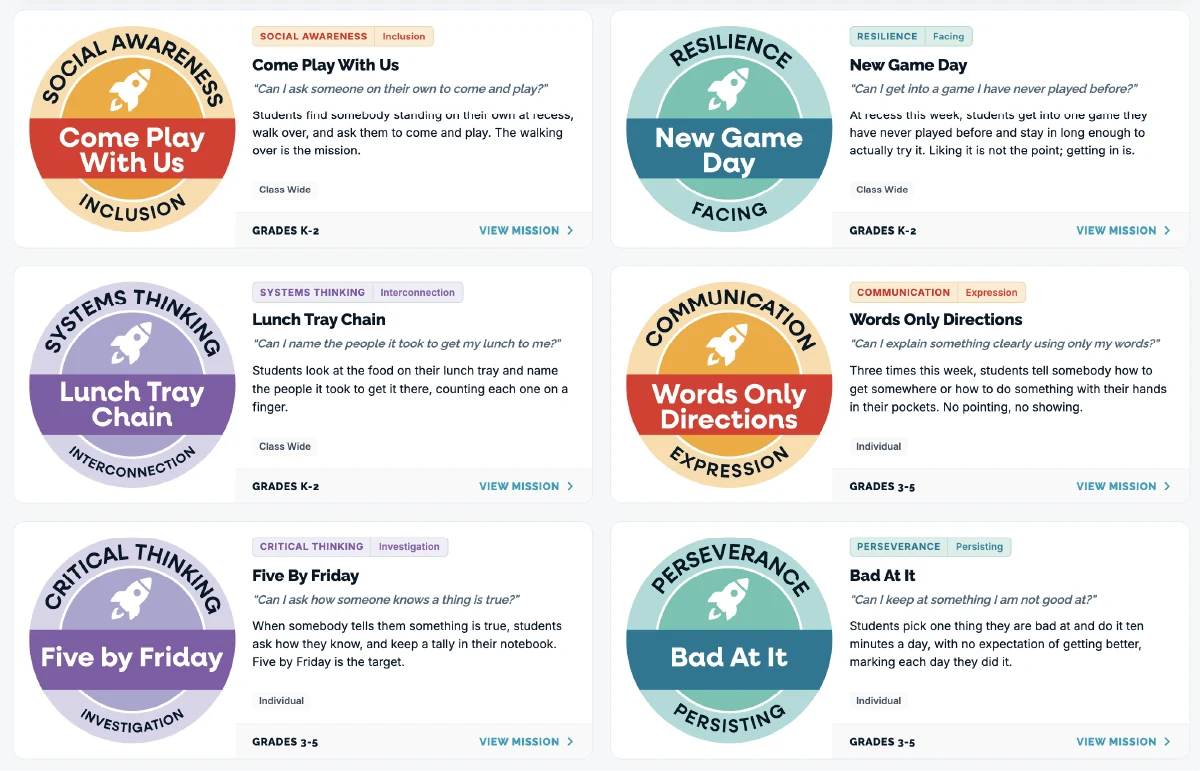
After the experience, students reflect on how they used the skill and where it fits in their own lives, building the habit of thinking about their own thinking. A Side Quest gives students a way to apply the skill in daily life, beyond the classroom.
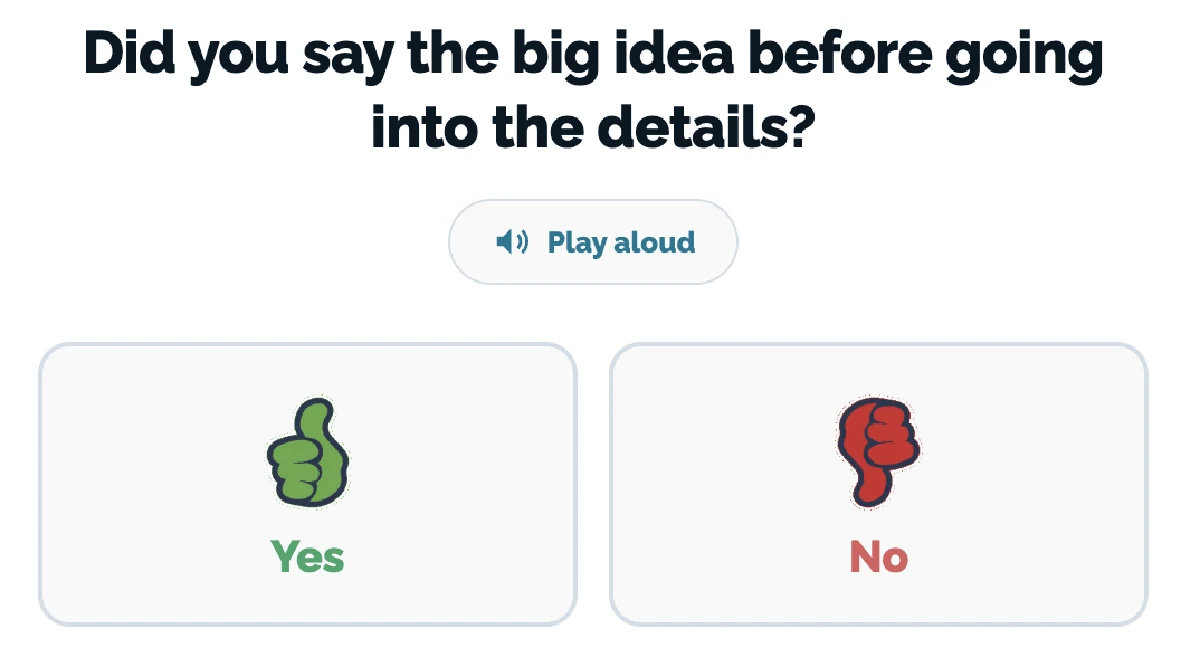
A Pulse Check closes each lesson, a fast read on whether the skill is growing. It gives teachers evidence of real skill-building through a short formative check, captured right inside the lesson.
Where districts use the HUB
One system, the same data and the same language, wherever human skills are being built.
Districts that invest in SEL, Portrait of a Learner, and human skills priorities get asked to show it's working. The HUB provides performance-based evidence of skill growth aligned to accountability reporting.
Districts screen for reading and math but have had no equivalent for human skills. The HUB shows teachers which skills a class is strong in and which need attention, then points to the lessons that build them. Pulse Checks track whether the support is working.
A third-grade teacher teaches a fifteen-minute curiosity lesson before a read-aloud, so comprehension goes deeper. A fifth-grade teacher builds perseverance before a hard problem set, so students stay with the difficulty. The skills students bring to academic work change what they get out of it.
Afterschool and summer programs use the HUB to show measurable growth in human skills. Staff facilitate without specialized training, and the reports speak the language district partners expect.
Hear from leaders using the HUB to give their boards, staff, and communities evidence they can stand behind.
Anaheim Elementary School District — [story pending consent]
Mt. Diablo — Whole child growth
Stockton — Engagement
Fresno — Teamwork
In a 30-minute demo, we will walk through the assessment experience, show you a lesson and the play that follows it, and explore how the data connects to your district's priorities at every level.