Measure and Improve Human Skills with the Same Rigor as Academics
Prove what matters with one connected system for assessing, reporting, and improving human skills.
Benchmarking supports:
Prove what matters with one connected system for assessing, reporting, and improving human skills.
Benchmarking supports:
Districts have committed to human skills with initiatives like Portrait of a Learner, and social emotional learning. The challenge is securing defensible evidence of human skill growth to inform decision-making, resourcing, and efficacy of these initiatives.
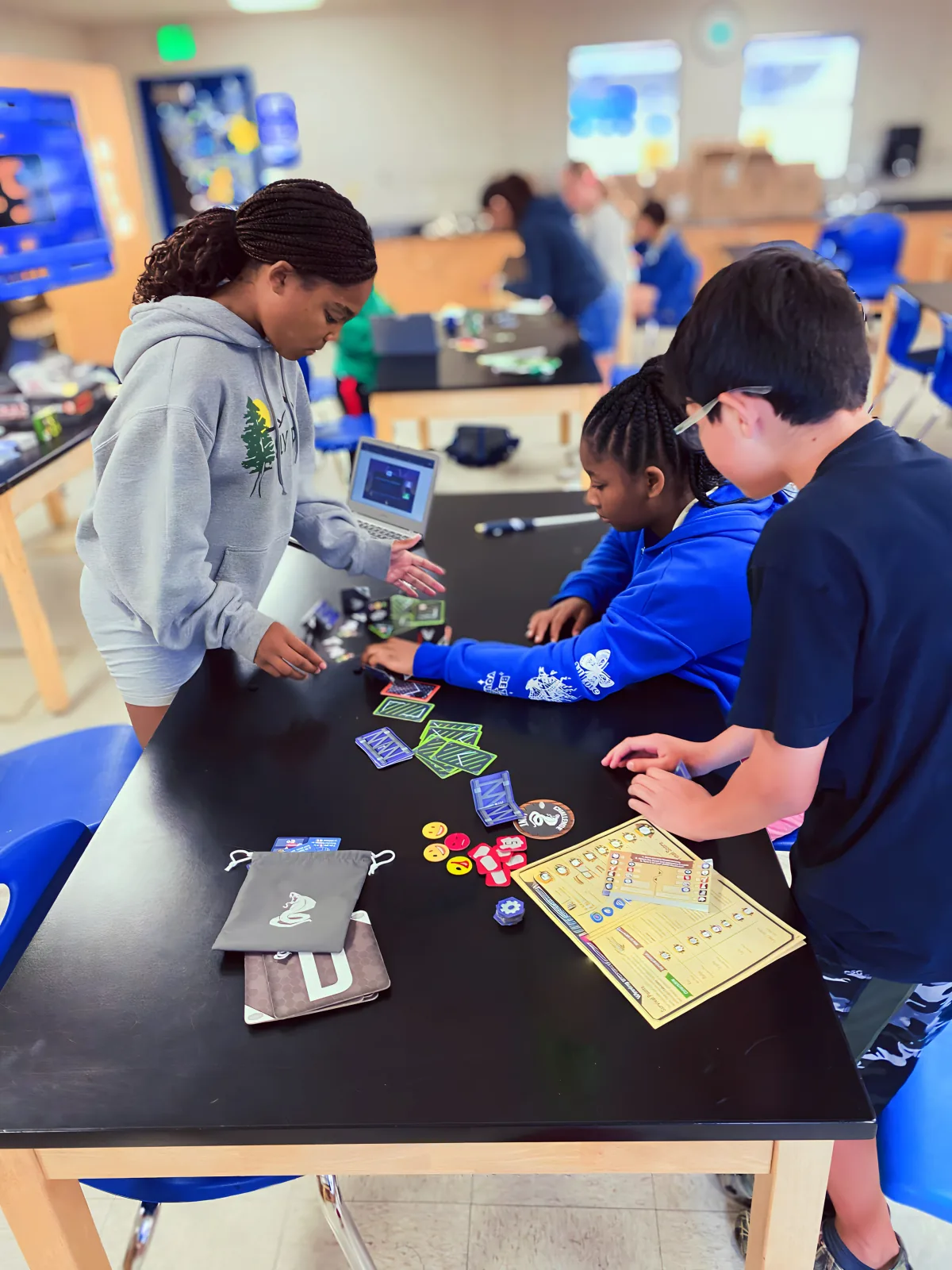
Real performance produces real evidence. Students collaborate, communicate, and solve problems through structured experiences, and human skills become visible the moment a student demonstrates them.
Using the same assessment across every classroom, school, and grade level produces data that aggregates cleanly and compares year over year. Districts see growth where it was previously invisible.
Objective, comparable data districts can bring to school board meetings, accountability reports, and budget discussions. The evidence validates the investment in human skills.
Clear evidence of which students are demonstrating each skill, and where each one sits against grade-band expectations.
Comparable data across classrooms and grade levels, so coaching and resources go where students need is greatest.
Defensible evidence of student growth in human skills alongside academic outcomes, reported against the competencies your board and community recognize.
Every student's strengths are named and scored against what the grade band expects, so growth becomes something a student can see in themselves and carry into school, work, and life ahead.
76%
Job postings that request durable human skills.
America Succeeds · Durable by Design, 2025
87%
Executives report skill gaps now or expected within a few years.
McKinsey Report, 2025
90%
Global executives agree soft skills are more important than ever.
LinkedIn, 2024
HUB Benchmark scores every human skill against what the grade band expects, compares results across classrooms and schools connecting each score to the intentional ways to be responsive to student needs.
Benchmark
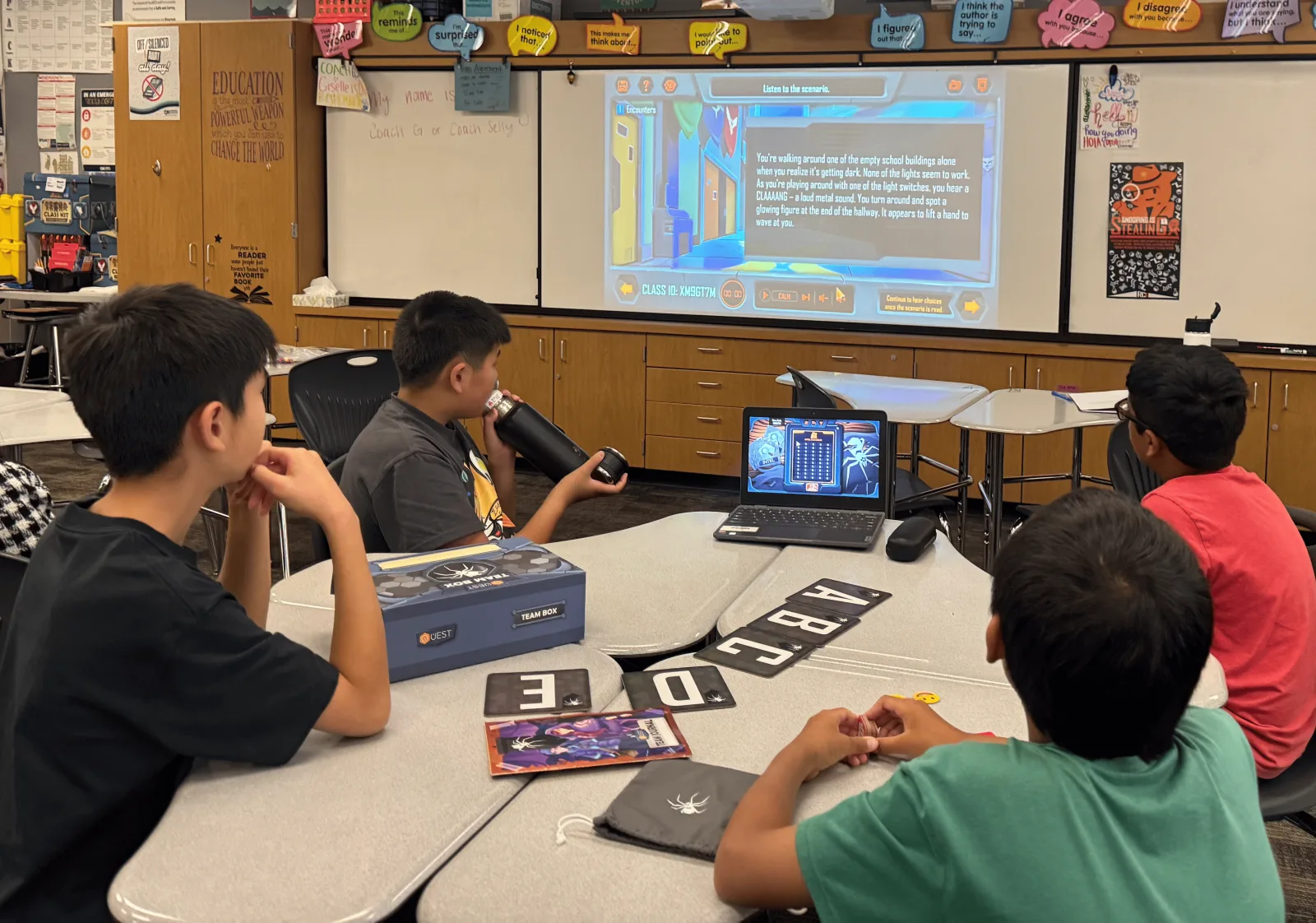
Students work through performance tasks in small groups, then report on how they applied their skills. Teachers rate the same skills against shared definitions, and AI analysis scores what students said.
Every score answers one question: are students demonstrating the human skills expected for their grade band?
Compare
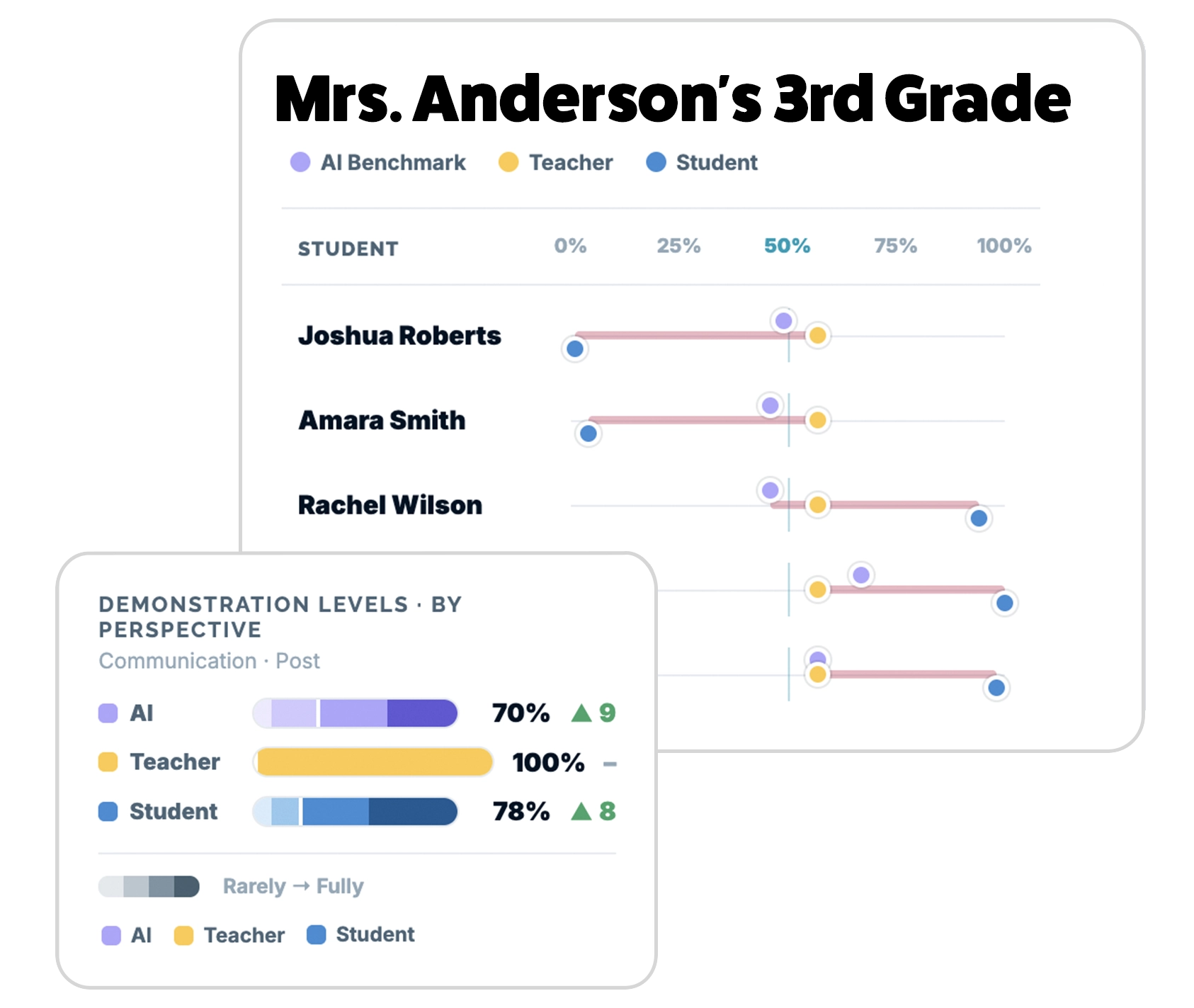
One score per skill aggregates cleanly, so leaders can compare classrooms to classrooms, schools to schools, and this year to last.
Improve
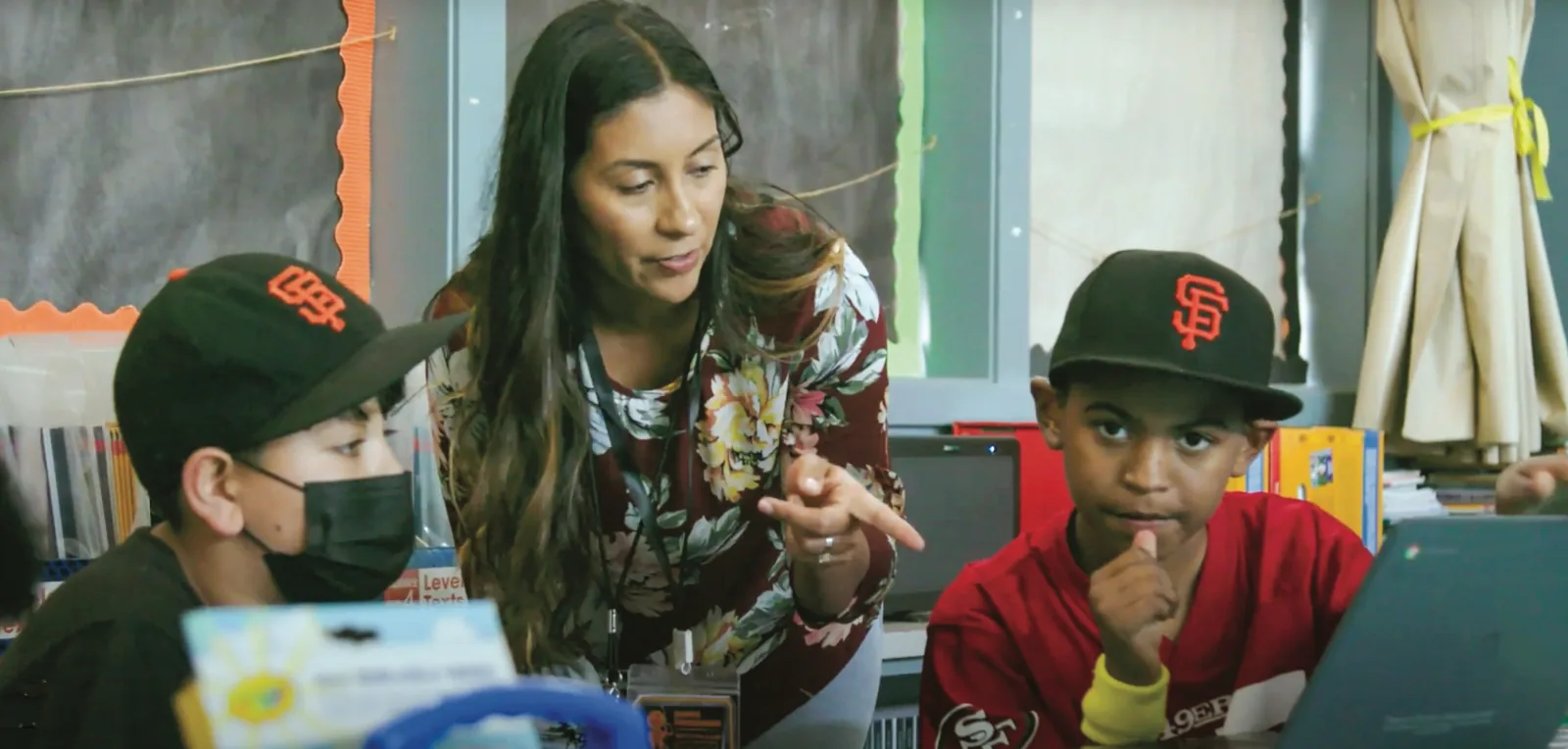
Each benchmark shows which skills are below grade-band expectation and connects to the intentional lessons that build them. Pulse Checks track the same skills between windows, and the next benchmark shows how far students moved.
The comprehensive human skills assessment. Students demonstrate skills in performance tasks, teachers rate the same skills, and AI analysis scores what students said, producing one scale score per skill three times a year.
Explore HUB BenchmarkBenchmark results reported for each individual student, giving MTSS teams and teachers the student-level detail that tiered decisions require.
Explore HUB Student ProfilesBenchmarking is not another initiative competing for your district's attention, it's the evidence layer to prove impact.
Districts lack a way to measure whether students are growing in the skills of their Portrait. We map the Human Skills Framework directly to common Portrait competencies, turning a vision document into evidence districts can report on year over year.
Explore Portrait of a Learner AlignmentYour district already screens for reading and math three times a year. Benchmarking adds the human skills equivalent, scored against grade-band expectations so MTSS teams can be responsive to what students need, when they need it.
Explore MTSS AlignmentMost SEL curriculum measurement is limited to perception surveys. We capture SEL competencies through what students actually do during collaborative experiences, producing defensible evidence of growth in the same competencies CASEL names.
Explore SEL AlignmentHear firsthand how benchmarking is shaping classrooms and giving leaders evidence of student growth they can stand behind.
Bonita Unified School District
Used the benchmark to turn their Portrait of a Learner from a vision document into measurable evidence of student growth.
Anaheim Elementary School District
Replaced perception surveys with performance-based assessment to give their school board defensible evidence of SEL investment.
Connect with us for a thirty-minute conversation. We will look at how benchmarking could connect to the work your district is already doing, and what the first year of evidence could surface for your team.
See Our Solutions for Benchmarking: HUB Benchmark · HUB Student Profiles