Develop Human Skills through Learning by Doing
A curriculum that develops human skills through real practice and measures whether students grew. Grounded in research, aligned to the Human Skills Framework, and backed by evidence.
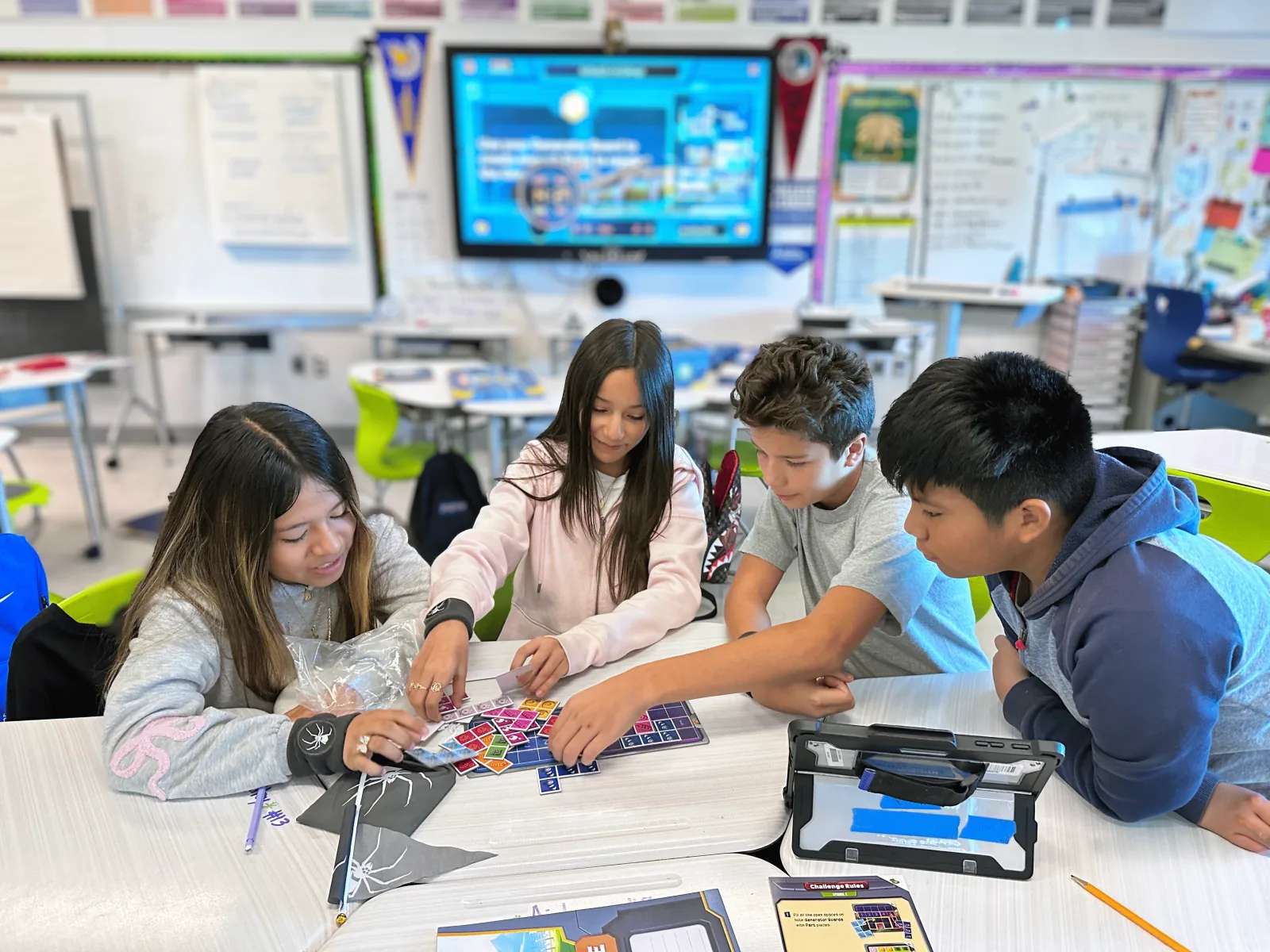
A curriculum that develops human skills through real practice and measures whether students grew. Grounded in research, aligned to the Human Skills Framework, and backed by evidence.
Districts have made real commitments to human skills. The harder part has been finding a curriculum that develops them and proves it. Getting it right comes down to three things.
Students can learn what collaboration means and still not do it when a group is counting on them. An effective curriculum teaches the skill, then returns students to it across new situations that require them to use it.
Human skills taught as theory rarely take hold. An effective curriculum puts students in experiences where using the skill is the only way to move forward, so students stay in it long enough to build something real.
Most curricula cannot answer whether the skill actually grew. An effective curriculum measures the skill while students are using it and tracks it against a clear developmental progression. That is what turns a record of activities into evidence a district can report and defend.
Lessons students enjoy that are easy to facilitate and build real skills.
One coherent curriculum across every classroom, building the same skills the same way.
Defensible human skills growth, ready to report alongside academics.
Real practice in the skills that shape their future, and language to name their strengths.
Our curriculum delivers research-backed outcomes for students, teachers, and districts. Backed by evidence, it's a trusted solution that drives measurable growth in human skills, engagement, and school climate.
86%
86% of students rated their experience as "extremely positive," proving that human skills growth can be engaging and meaningful.
96%
Students' collaboration grew from 68% at the start of the program to 96% by the end, the largest gain among the skills measured.
91%
91% of teachers reported feeling confident implementing our curriculum after just one session, thanks to its facilitator-ready design and built-in supports.
Our curriculum is ESSA Level III Rated, with five statistically significant findings from a study of 806 facilitators across 14 participating districts. Learn how we deliver measurable growth in human skills aligned to federal funding requirements.
Human skills are built through intentional instruction, real practice, real-world application, and reflection that locks it in. The results show up in how students actually use these skills, in the classroom and out of it.
Learn It · Instruction
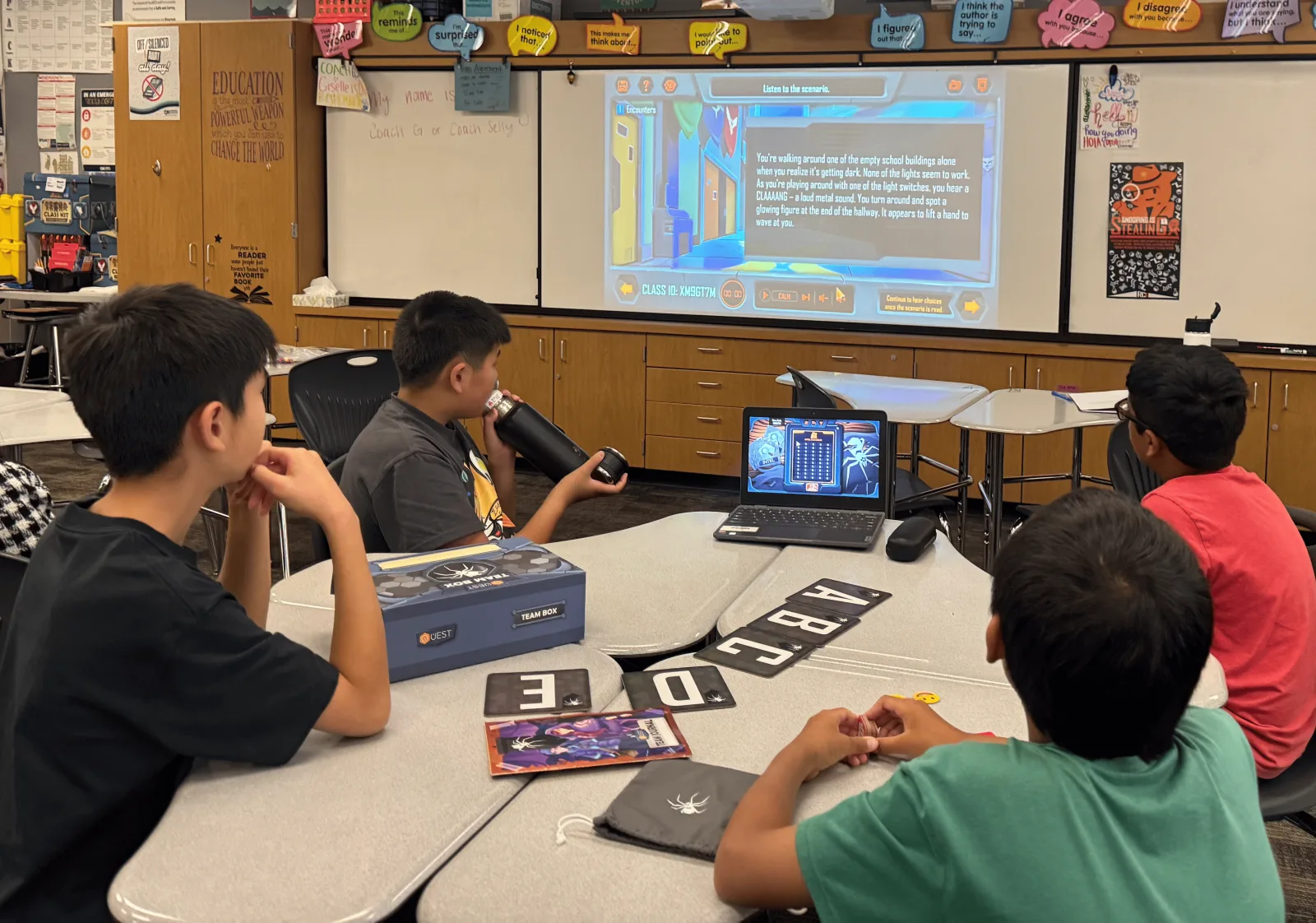
You can't use what you can't name. Students learn one skill directly, then use it before the lesson ends. Kids get curious, and for a lot of them, that's the first time the skill has a name. Naming it before they use it is what turns a feeling into something a student can recognize and reuse.
Play It · Practice
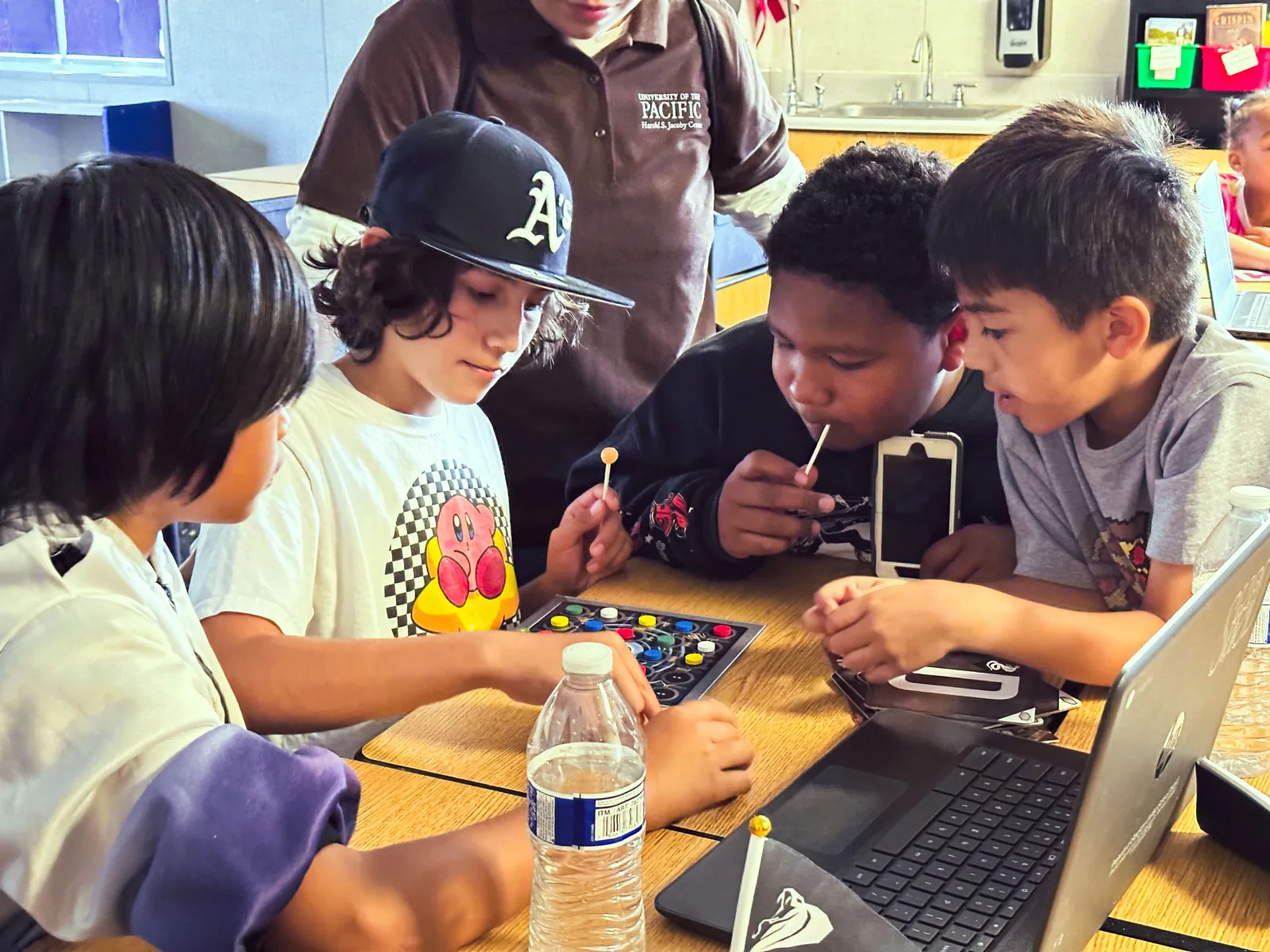
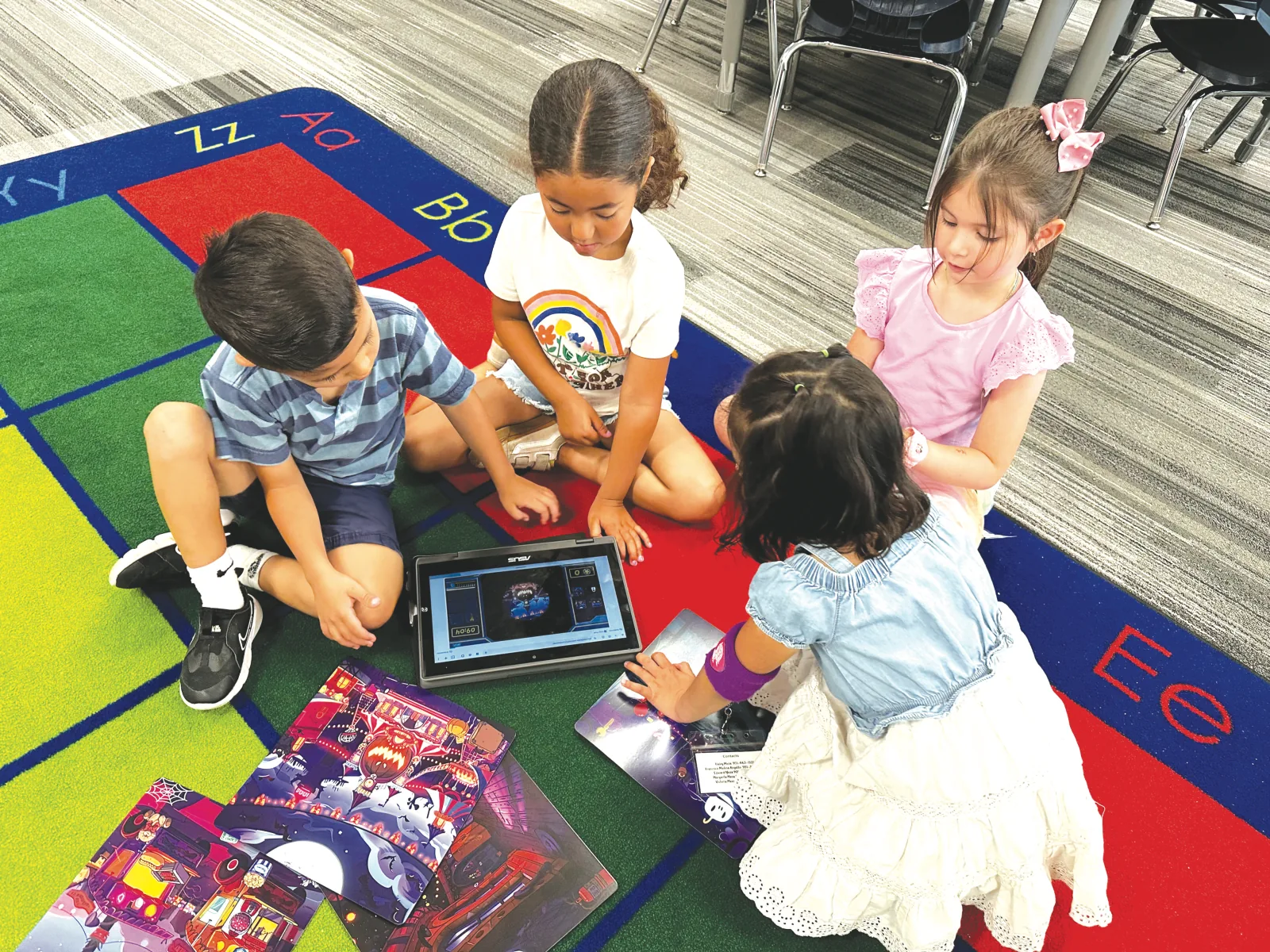
A skill only proves itself under pressure. Students practice the skill together, inside a challenge the whole class shares, designed for connection, not more screentime. Practicing under real pressure turns a skill into something that holds up once the challenge ends.
Apply It · Application
A skill has to leave the room to count. Students apply the skill on their own, in a real moment already inside their day. Choosing to use it when no one is watching is what turns a mission into something a student actually owns.
Own It · Internalization
A skill without reflection fades fast. Students reflect on a moment they used the skill, and think through what it meant. Understanding what it meant is what turns an experience into something a student keeps reaching for.
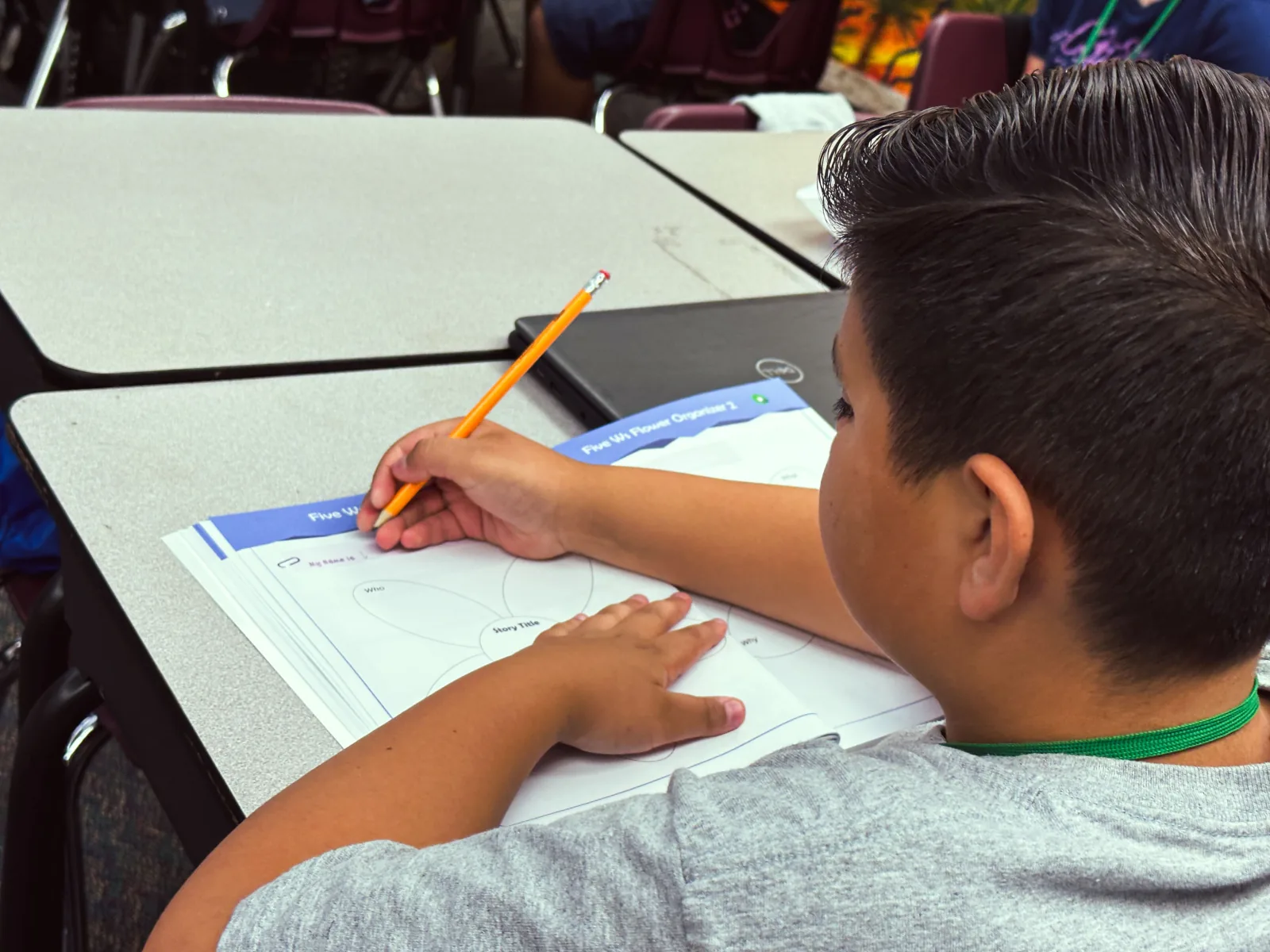
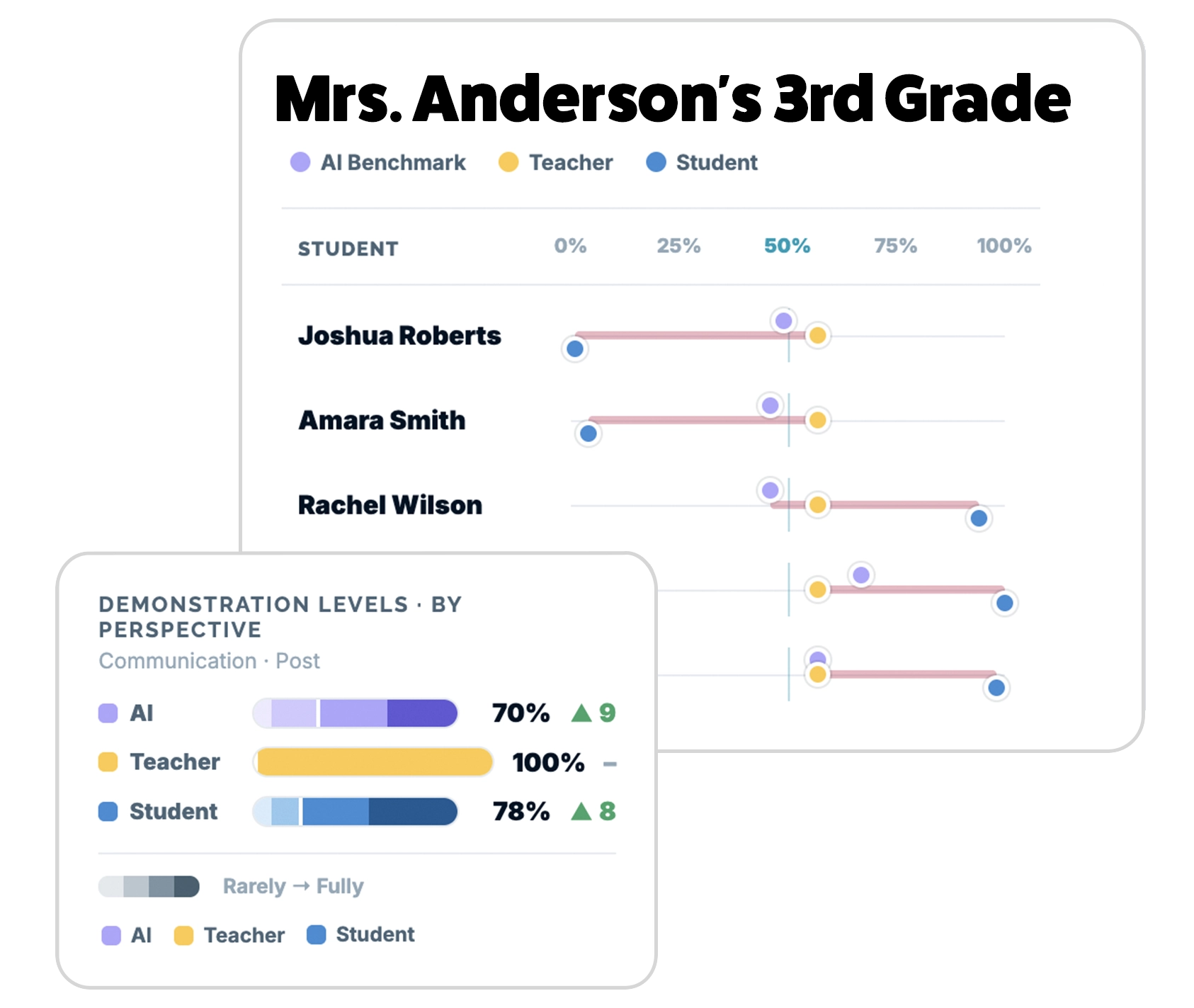
Check It · Assessment
Growth caught late is growth missed. Students report on the skill right after using it, a formative check built into the moment. Catching it early is what turns a number into something that reflects real growth in the student.
Pick the fit for your schedule and your students. Each one builds and measures the same human skills.
A digital SEL curriculum for grades TK-6 aligned to CASEL Competencies.
Explore SEL CurriculumA student leadership program where grades 3-12 solve real problems in your community.
Explore Leadership CurriculumThe curriculum is built to strengthen what your district already prioritizes. Grounded in the Human Skills Framework, it supports, integrates with, and aligns to the initiatives you're already invested in.
The curriculum pairs explicit instruction with real-world practice, so students build a skill's vocabulary and then use it. Growth is measured against the same CASEL competencies your district already reports.
Explore SEL AlignmentThe curriculum teaches and measures the exact competencies your Portrait names, so the profile turns into something students actually practice. Growth is reported the same way, year over year.
Explore Portrait of a LearnerThe curriculum adds a whole-child layer alongside academics, reaching every student and responding to those who need more. Growth shows up in the same screening and progress data your MTSS work already runs on.
Explore MTSS AlignmentThe curriculum builds the 4Cs through experiences that require students to use them in the moment. Growth is reported against the same framework your district already uses for career and college readiness.
Explore Career & College ReadinessHear firsthand how our curriculum products shape classrooms and empower students.
We will walk you through the curriculum, the approach behind it, and the reporting that proves it works. Thirty minutes is enough to see whether this fits your students' needs.
See Our Curriculum Solutions: SEL Curriculum · Leadership Curriculum · The HUB